
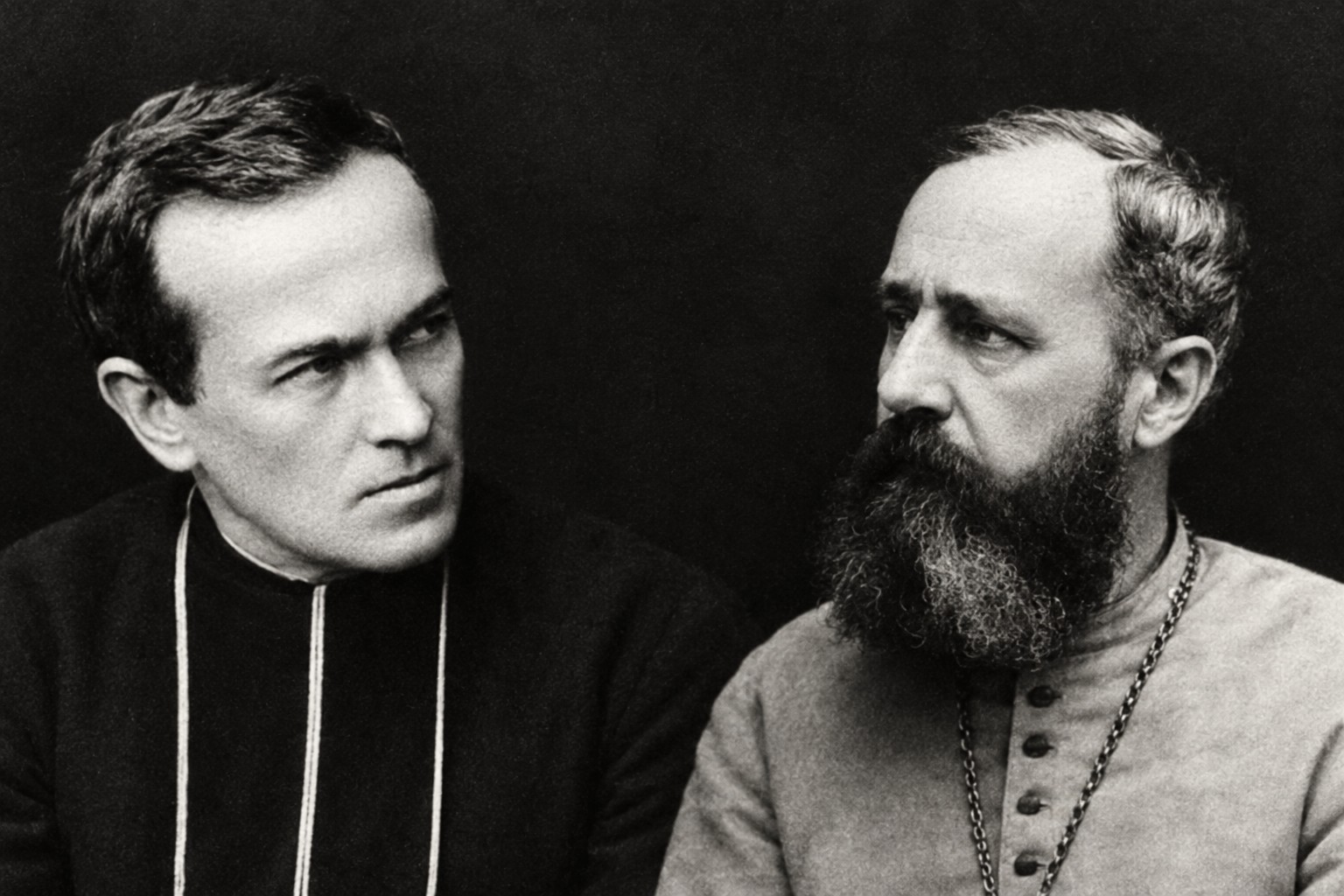
Lyon, Guillotière. On Sunday, October 4, the church of Notre-Dame Saint-Louis hosted a significant celebration: the consecration of a new altar now housing the relics of Blessed Antoine Chevrier. This symbolic gesture, at the heart of the Antoine Chevrier Year, highlights the lasting influence of the founder of the Prado on Lyon’s spiritual life — and on the missionary history of the Society of African Missions (SMA).
A tribute that goes beyond commemoration
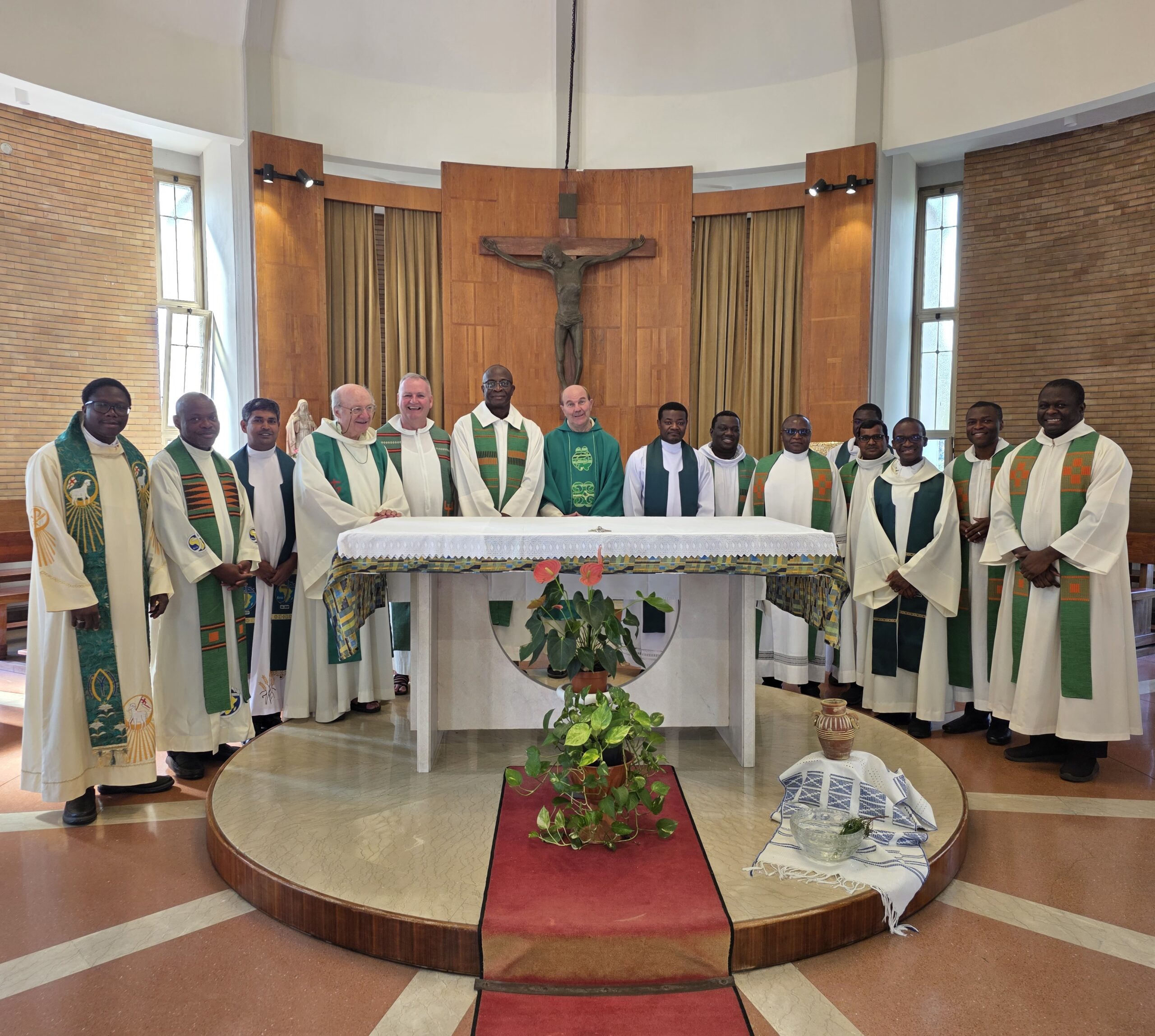
Surrounding Archbishop Olivier de Germay of Lyon were several members of the SMA, including Archbishop Michel Cartatéguy, emeritus of Niamey. The Superior General of the Prado, Fr. Diego Martín Peñas, who travelled from Spain, was also present, accompanied by priests from his congregation. Diocesan priests joined the celebration as well. Their presence was far more than a matter of protocol. It recalled a deep, longstanding connection between Chevrier’s spirituality and the missionary vocation of key figures within the SMA. Over four days, from October 1 to 4, the parish of Blessed Antoine Chevrier organized a series of events, including the solemn transfer of the relics from the Prado chapel. It was a way of placing Chevrier once again at the center of Lyon’s collective memory.
Antoine Chevrier, a priest shaped by poverty
Born in Lyon in 1826 and ordained in 1850, Antoine Chevrier encountered profound social and spiritual poverty in the Guillotière district — an experience that transformed his ministry. The night of Christmas 1856 marked a decisive turning point: before the Nativity scene, he understood that his life had to be given to the poorest. In 1860, he purchased an old dance hall, the Prado, and turned it into a place of welcome, education, and catechesis. What began as a local initiative gradually became a true spiritual family centered on a simple principle: “to follow Jesus poor.”
When the Prado inspires missionary vocations
In the 1870s, many young people who passed through the Prado were deeply influenced by Chevrier. One name stands out: Paul Pellet. He entered the Prado at age 12 and received a formation that shaped him for life. “I was raised by a saint,” he would later say. After studying at the minor seminary of La Côte-Saint-André, he joined the SMA in 1880, was ordained in 1883, and became bishop of Lagos in 1895. His path illustrates the spiritual fruitfulness of the Prado. Paul Pellet was not alone. Étienne Pellet, Joseph Fugier, Camille Bel, Pierre Piolat, and Joseph Pellat also embraced missionary life. For this generation, the Prado was a decisive seedbed for vocation.
Chevrier and Planque: a Lyon connection
The link between Chevrier and the SMA extends beyond the influence on a few vocations. It is rooted in a historical proximity. Antoine Chevrier and Augustin Planque, the first Superior General of the SMA, exercised their ministry within the same ecclesial environment in 19th‑century Lyon. No correspondence proves a direct collaboration, but their presence in the same neighborhood, their commitment to the poor, and their converging missionary vision make it entirely plausible that they met or exchanged ideas.
Two visions, one shared missionary passion
Chevrier sought to form priests capable of living among the poor. Planque sent missionaries to Africa to proclaim the Gospel in demanding contexts. Their institutional paths differed, but their spiritual intuition was strikingly similar: to serve those with the least, and to form priests ready to give their lives for the mission. Today, the Prado and the SMA remain rooted in the same Guillotière neighborhood, a sign of enduring historical and spiritual continuity.
A presence full of meaning
The participation of the SMA in the October 4 celebration carried three layers of significance: Memory — recalling that Chevrier inspired missionary vocations that shaped the SMA’s history. Recognition — honoring a spirituality born in a working-class district of Lyon that went on to inspire international vocations. Hope — affirming that mission is transmitted from generation to generation, often quietly, through encounters and personal journeys.
A legacy that continues to live
The story of Paul Pellet captures this link: a child formed at the Prado becomes a missionary, then a bishop in Africa. Thus, an initiative born in a former dance hall in the Guillotière is indirectly connected to the evangelization of Nigeria and the Gold Coast. By placing Antoine Chevrier’s relics on the new altar, the Church of Lyon reminds us that his legacy is not confined to the past. It continues to inspire men and women who dedicate their lives to mission. “Following Jesus poor”: a call born in Lyon, whose missionary resonance extends far beyond the city’s borders.
Leave a Reply