
'/%3E%3C/svg%3E)


It began rather casually. Among the many things we were discussing, someone told a story about a gardener who once asked a bishop a surprisingly simple question:
“Who are you working for?”
It is a simple question, but perhaps one worth bringing into our own reflection on missionary life.
At first, the answer seems obvious.
As a priest, you might say, “I work for the Church.” As a missionary specifically, “I work for the mission.” If you are involved in pastoral, perhaps you would answer, “I work for the people.”
All these answers may be true. But there is a deeper question beneath them: Who is really at the center of your work?
Because it is possible to spend years doing good things and, somewhere along the way, lose sight of the One for whom we began doing them.
Missionary life can be demanding. There are meetings to attend, emails to answer, reports to prepare, projects to organize, people to accompany, funds to raise, programs to evaluate and countless practical problems to solve. Much of this work is necessary. Mission needs organization. People need to be accompanied. Projects need to be managed. Resources need to be accounted for.
But somewhere in the middle of all these activities, a missionary can slowly forget something essential.
The work can become so demanding that the One who sent us begins to receive less of our attention than the work itself.
Jesus himself experienced the pressure of demands. People were looking for him, needs were multiplying and his disciples were busy. Yet, He repeatedly did not allow the needs around him to determine everything he did.
The question, therefore, is not whether we should work hard.
The question is: What is driving our work? Who benefits from my work?
This may be the more uncomfortable question.
We can tell ourselves that we are working for the Church, for the Society, for the Mission and for the People. But if we look honestly at our work, we may discover that something else is also benefiting from it.
Perhaps it is our reputation: We want people to notice what we have accomplished.
Perhaps it is our position: We become attached to titles, responsibilities, influence or the feeling of being needed.
Perhaps it is our security: We resist anything that might require us to leave what is familiar and comfortable.
Perhaps it is our own plans: We can even use religious language while quietly pursuing ambitions that are primarily our own.
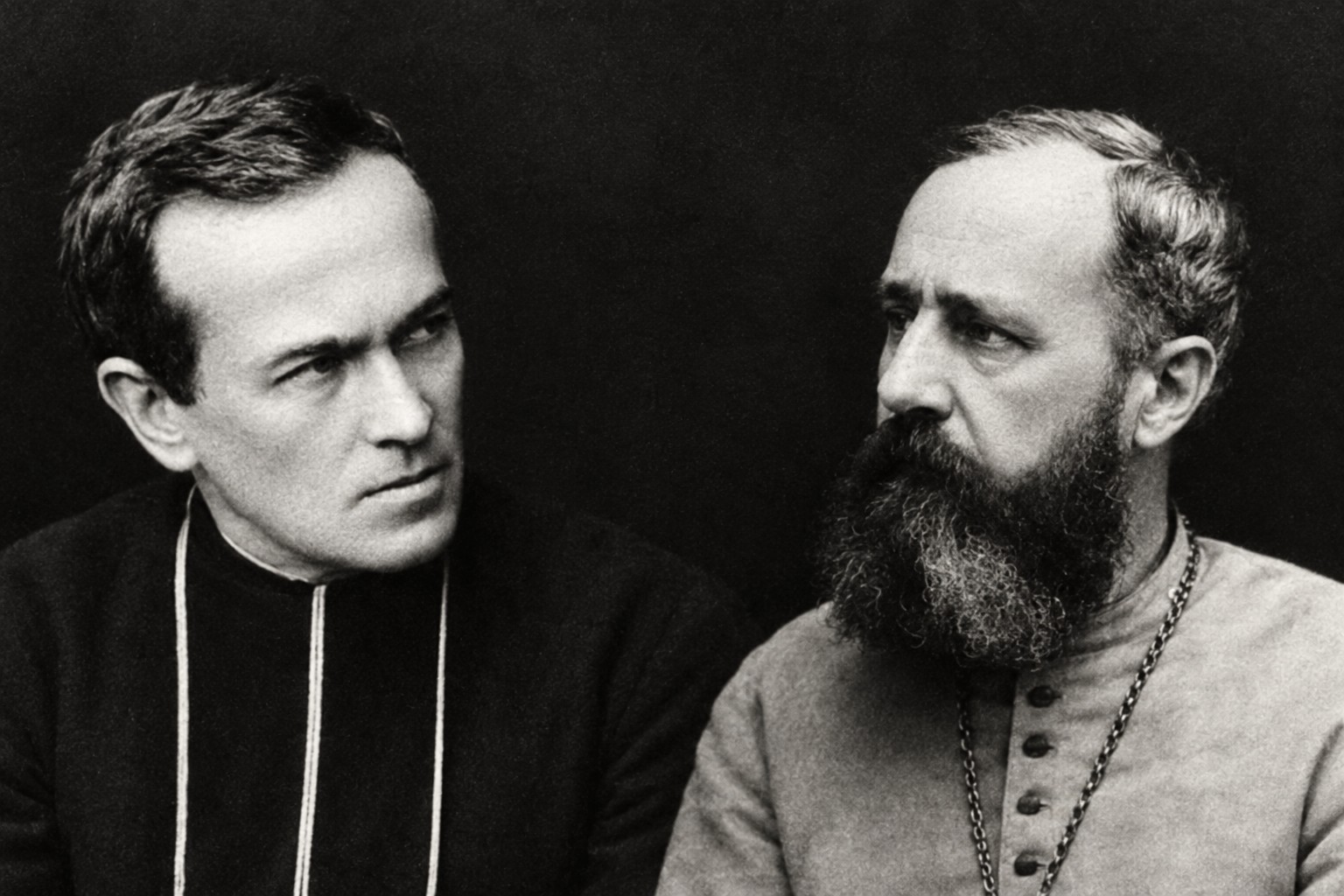
These possibilities are not as far removed from missionary life as we might like to think. Bishop de Marion Brésillac, the founder of the SMA, was already conscious of how easily honor, recognition, friendship, consolation and the satisfaction of ministry could become mixed with the desire to give oneself to the mission. In his Retreat to Missionaries, he put it with characteristic directness:
“What are you looking for? Quid quaeritis? Honor? Don’t come here. The joy of ministry? Don’t come here. For friendship, for recognition, consolations, in return for all that you do? Don’t come here.“
And sometimes, what benefits us is simply the satisfaction of remaining busy. We work, organize and respond because it can be difficult to stop.
This is not necessarily because we have bad intentions. It can happen gradually.
The demands of ministry accumulate. Responsibilities increase. Expectations grow. And without realizing it, we can begin to measure our worth by how much we accomplish.
That is when the question becomes important: Who are we working for?
Perhaps the answer is not that we need to do more.
Perhaps we need, from time to time, to pause and look again at what we are doing and why we are doing it.
Our motivations are often mixed. We can begin something with one intention and discover, somewhere along the way, that other motivations have entered.
Perhaps that is why the question “Who are you working for?” deserves to remain with us.
Not as an accusation, nor as a judgment, but as an invitation to look honestly at our own missionary life. Because the answer may change from one day to another.
There are days when we may feel that everything we do is clearly connected to the mission. There are other days when routine, tiredness, disappointment or the pressures of ministry can make the original purpose harder to see. And perhaps this is where the reflection becomes more personal.
What happens when ministry becomes routine? What happens when administration takes more time ? What happens when maintaining what already exists leaves little space for imagining what could be? What happens when we become more concerned about completing the work than about the people for whom the work exists? What happens when our identity becomes so closely connected to a particular role that changing roles feels like losing something of ourselves?
And what happens when we can no longer remember the last time we asked ourselves, sincerely and without giving ourselves an immediate answer: Who am I doing this for?
There may be no simple formula for answering these questions.
Missionary life is too complex for that. It involves prayer and administration, pastoral work and practical responsibilities, people and structures, vision and routine. Some days are full of meaning; others are simply demanding. Sometimes we see the fruits of our work. Sometimes we do not.
Perhaps the point is not to find a perfect answer. Perhaps the point is simply not to stop asking the question: Who am I working for?
When the work is going well.
When it is going badly.
When people appreciate me.
When nobody notices.
When I am enthusiastic.
When I am tired.
When I am simply fulfilling an assignment.
Perhaps somewhere within that question lies an opportunity to rediscover something about our vocation, our priorities and ourselves.
And perhaps each of us has to answer it in our own way.
Who am I working for?
Frère Fridolin de la Miséricorde


Leave a Reply