
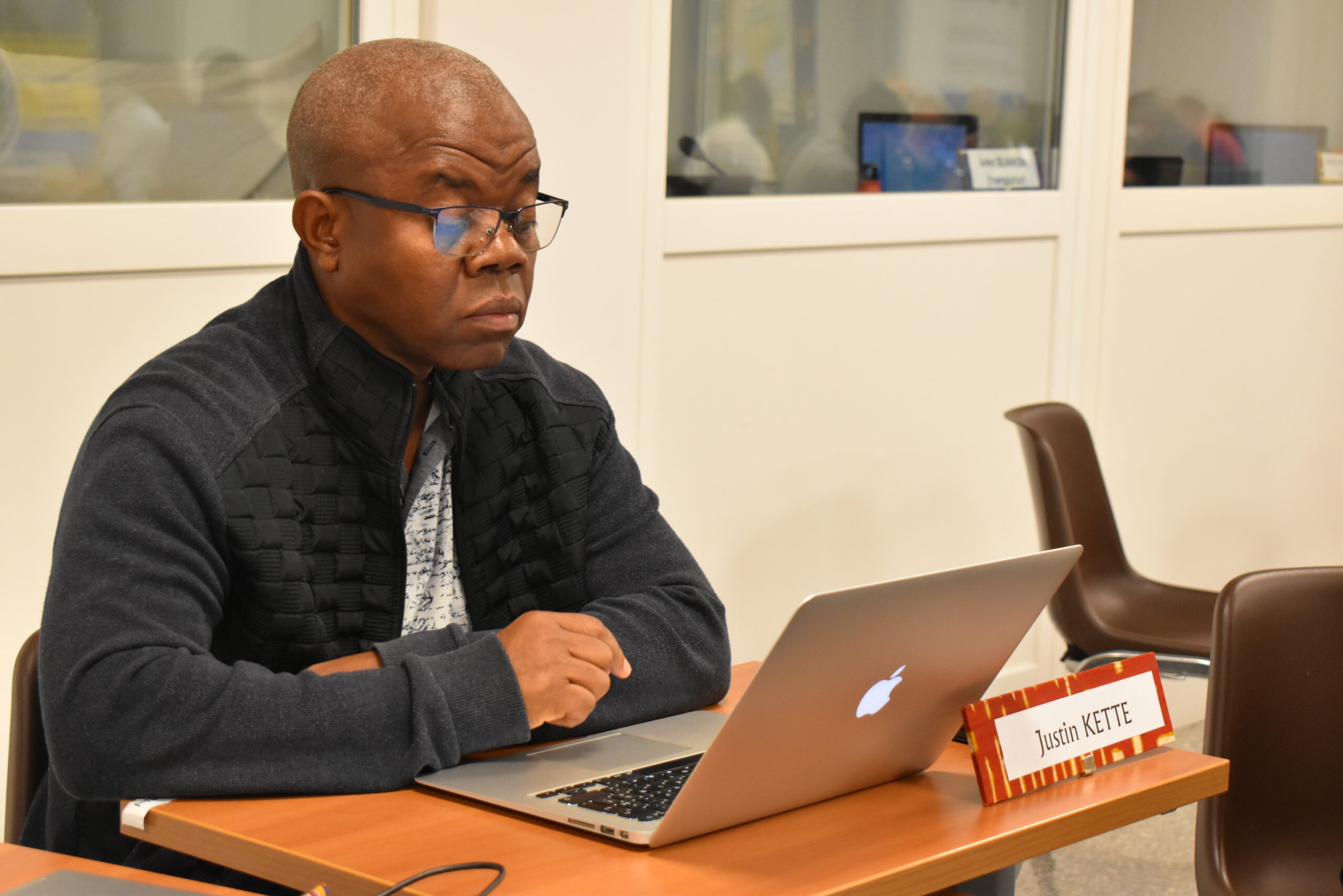
After more than twenty years of ministry across Liberia, Togo, Nigeria, France and the Central African Republic, Fr. Justin Sylvestre Kette, SMA, is preparing to begin a new chapter of his missionary life in South Africa. His journey has taken him from pastoral ministry in contexts marked by war and instability to responsibilities in governance, teaching and service within the Church. It has also led him to advanced studies in canon law, which he sees as an instrument of peace and justice. In this candid interview, he reflects on the experiences that have shaped his understanding of mission: patience, understanding, availability and the awareness that a missionary is ultimately only a steward serving the Master.
After serving in contexts marked by instability, particularly post-civil-war Liberia, what pastoral and human lessons continue to accompany you today?
Working as a missionary in a post-armed-conflict context such as Liberia was a great challenge for me on every level. I was a young priest newly arrived in the country, unfamiliar with both the culture and the difficult circumstances left by the civil war. Five SMA confreres were already present when I arrived, and they contributed greatly to my welcome and integration.
I retain two important attitudes to develop in such a context: patience and understanding. We need to be patient with the people to whom we are sent, to try to understand their situation, their history and their mentality, and above all to avoid judging them or trying to change them at all costs.
Your time in the rural mission of Sanniquellie, in the Diocese of Gbarnga, after your formation in South Africa, was brief but significant. What did you learn about evangelisation in rural Africa?
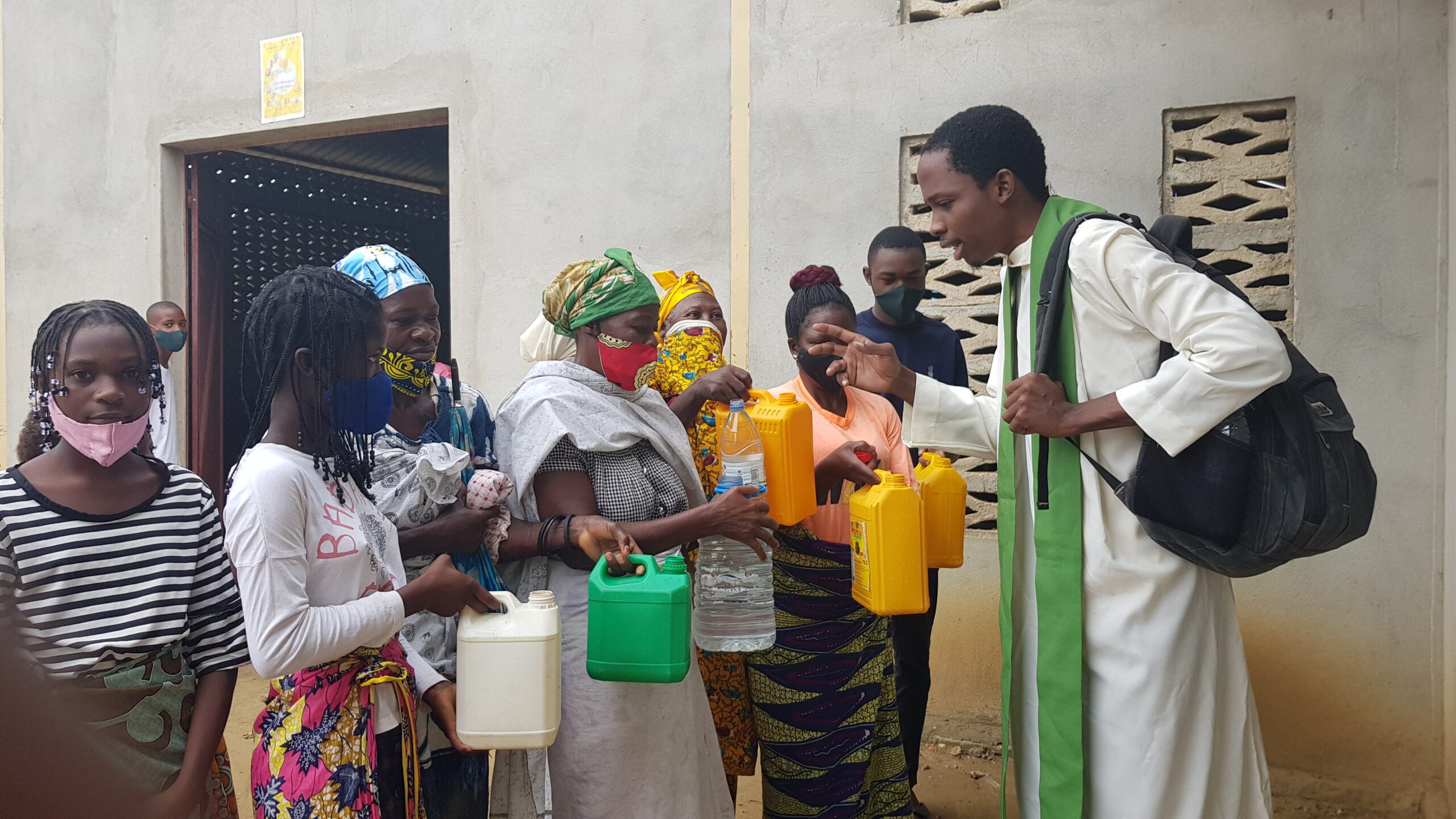
My experience at the Sanniquellie mission in the Diocese of Gbarnga lasted only a short time—barely one pastoral year—but it was very enriching. My main concern was how to rebuild a Christian community after a long period of war and exile.
The training I received at the Lumko Institute in South Africa, particularly in rural catechesis, helped me understand that evangelisation begins with being present and living alongside people in all the complexity of their existence. We cannot evangelize from a distance; we have to share people’s lives.
As Secretary of the African District in Formation in Lomé, you worked at the heart of SMA restructuring. How did this experience shape your understanding of missionary governance?
My experience as Secretary of the African District in Formation in Lomé was a great school of administrative learning. I had not prepared myself to take on such a responsibility only two years after my ordination. Looking back, however, I can say that my time in Lomé greatly broadened my understanding of the structures and workings of SMA governance.
To make a world, you need the whole of it! Likewise, to advance the mission effectively, some people must also serve in administration, especially in securing the financial and human resources that mission requires. But I also learned that the same confreres should not remain in administration for too long, lest they begin to think they are indispensable or become self-appointed specialists in administration.
Your years in Nigeria, particularly in Jos and Kaduna, exposed you to another pastoral reality. What did you take away from that experience?
After the restructuring of the African District in Formation into three Units, I had expressed my desire to return to parish ministry, and the outgoing Council appointed me to Nigeria. I spent only one pastoral year there, serving in the dioceses of Jos and Kaduna, but it was a very rich experience.
I discovered a very dynamic local Church, where our older confreres had been true pioneers.
Your advanced studies in canon law in Strasbourg, culminating in a doctorate, transformed your ministry. How does this canonical perspective influence the way you serve the Church today?
I accepted the decision of my Superiors to send me to study canon law at the University of Strasbourg as a personal challenge. Those studies first changed my own understanding of law, which is often wrongly perceived as rigid and punitive.
In reality, canon law is primarily intended to regulate relationships between people and institutions, and to promote order, peace and justice, so that arbitrariness and abuse do not prevail within the Church of Christ.
The subjects I chose for my Master’s degree and doctoral thesis were developed precisely from this perspective: to make my modest contribution so that canonical norms might be received as instruments of peace and justice among all the faithful.
You exercised parish ministry in France while also carrying responsibilities within the Strasbourg Province. What did that experience teach you for your new mission?
Alongside my university studies, I was a parish priest and also involved in the administration of the Strasbourg Province. I do not know whether the personal discipline I imposed on myself was always the best solution, but it enabled me to carry these different responsibilities at the same time.
I understood my administrative role in Strasbourg as a form of service in the evangelical sense, while my presence in the parish was a mission entrusted to me by those responsible for the Church. What motivated me above all was the desire to give the very best of myself.
I do not yet know the reality of the mission in South Africa well enough to say exactly what I will bring to it, but I go with the same spirit of service.
In the Central African Republic, you held several significant responsibilities. What impact did this period have on your missionary identity?
I would have preferred to be spared some of these responsibilities, because holding too many offices at the same time is not always a sign of efficiency or effectiveness! But most of these responsibilities came to me, and at times I felt morally obliged to accept them.
Nevertheless, I learned a great deal from them. They enabled me to know better the joys, expectations and challenges of the local Church from which I come.
You also served as chaplain to the English-speaking community in Bangui. What did you learn from this intercultural experience?
This was a service requested of me by the Cardinal Archbishop of Bangui, Cardinal Dieudonné Nzapalainga. The English-speaking community was very dynamic and consisted largely of Nigerian traders. It functioned almost like a parish.
This experience reminded me of what I had encountered in Nigeria, particularly the same spirit and zeal among the lay faithful. However, I find it difficult to draw a direct connection between that experience and my new mission in South Africa.
After more than twenty years of varied missionary experience, how do you see the current challenges of SMA mission in Africa?
In my humble opinion, mission remains first and foremost a matter of God who sends, and of men and women who are sent. Each person is called to respond to that call day after day.
Even though we are not indispensable, we must always remain in the position of the steward, the one who is sent, and never take the place of the Master, who is the Lord.
As you prepare to leave for South Africa, what priorities do you hope to set for this new stage of your mission?
I am not leaving with any preconceived objectives. I am going with an open and available spirit, ready to work according to the pastoral orientations of the local Church while bringing to it something of the SMA spirit.
I place my trust in the Lord. I believe that He will guide this new stage and help everything to unfold for the best, for the salvation of people and for His greater glory.
A Mission That Continues
From post-war Liberia to Nigeria, from governance in Lomé and Strasbourg to ministry in the Central African Republic, Fr. Justin Sylvestre Kette’s journey reflects a fundamental conviction: the missionary is not the master of the mission, but one who is sent to serve.
His successive assignments have taught him patience, understanding before judgment, leadership as service, and openness to whatever God asks. As he prepares to leave for South Africa, he does not carry a rigid programme, but an attitude that perhaps best sums up his missionary journey: an open spirit, a readiness to serve, and trust in the God who leads the mission.
Leave a Reply