
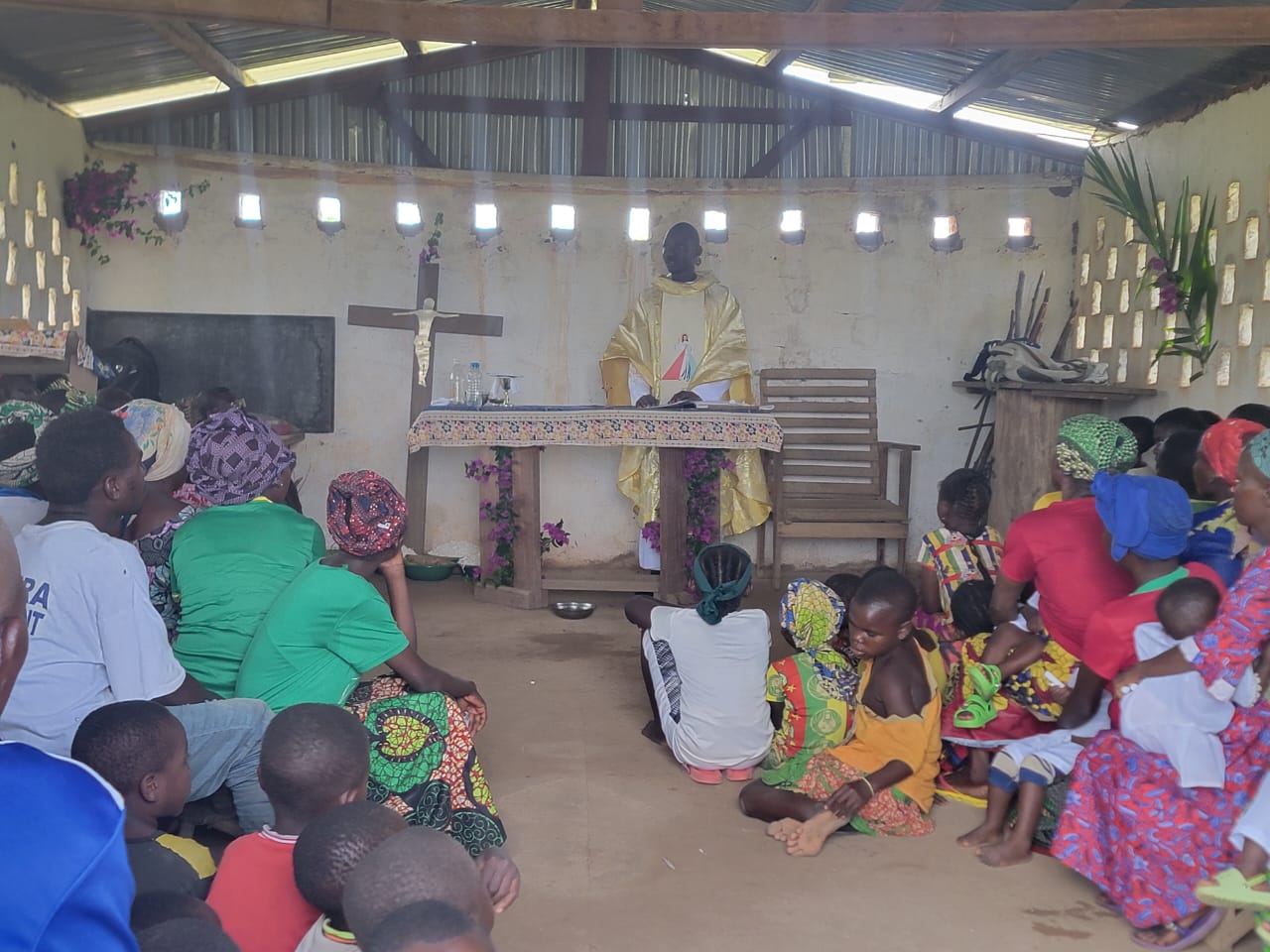
In 1973, a French fidei donum priest, Fr Michel Lambert, embarked on an ambitious undertaking in the heart of the Central African forest: establishing a mission at Bélémboké. His missionary vision combined the proclamation of the Gospel with a concrete commitment to the Indigenous populations, particularly the Ba’Aka, aimed at defending their dignity, promoting their freedom, and preserving their cultural identity.
More than fifty years later, this vision continues to inspire the mission of Bélémboké. On the occasion of World Mission Sunday 2026, the missionary community of Bélémboké gives thanks for half a century of presence, service and solidarity with the Pygmy populations and the other communities in the region.
Since its foundation, the mission of Bélémboké has been guided by three fundamental commitments: evangelisation, access to education and healthcare, and integral human development, with a particular focus on women promotion. Today, the SMA Fathers, in collaboration with the Dominican Sisters, Daughters of Our Lady of Nazareth, local staff and various partners, continue to bring this vision to life through concrete initiatives that open up paths of hope.
A Foundation Rooted in Human Dignity
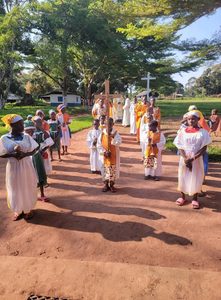
The birth of Bélémboké in 1973 represents an important moment in the missionary history of the region. At that time, the Ba’Aka Pygmy populations faced severe social and economic marginalisation. Their dependence on other groups in the region often limited their freedom, their access to essential services, and their participation in social life. In response to this situation, Fr Michel Lambert sought to create a place where the Pygmy people could live with greater freedom, come together and build their future, all while preserving their cultural identity.
In 1976, Fr Michel Lambert obtained authorisation to establish the village, welcoming the indigenous Ba’Aka and Ba’Gombé peoples. What makes this foundation unique is the simultaneous establishment of both the parish and the village.
Around the new mission, families gradually settled, building their traditional homes and organising their community life.
Bélémboké thus became a place of gathering, prayer and guidance, as well as a place of human development and of recognition of the dignity of Indigenous populations.
Fifty years later, this legacy continues to inspire the mission today, particularly through initiatives focused on education, healthcare, and community self-reliance.
Education: Opening the Doors to the Future
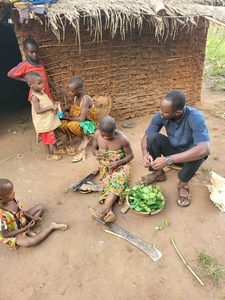
Education is now one of the main areas of activity of the mission of Bélémboké. It offers children and young people the opportunity to develop their talents, acquire knowledge and participate fully in the life of their communities and society.
Under a former program aiming at supporting Pygmy communities, about fifteen school buildings, each consisting of a single classroom, were constructed across various communities. These facilities gave children the possibility to begin their schooling close to their families. Over time, however, many of these buildings have deteriorated or been abandoned reducing access to education in certain areas.
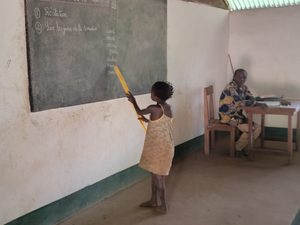
In Bélémboké, the church continues this commitment through a nursery school housed in a three-classroom building constructed in 2023. The school currently welcomes 168 children across the three nursery levels. They are supervised by three teachers, one of whom also serves as headteacher.
The church provides educational materials for both teachers and pupils. It also offers the children a light meal once a week to contribute to their well-being and encourage regular school attendance.
Furthermore, the church supports the village’s public primary school, which has only one state-appointed teacher. With the help of NGOs and other partners, the church also assists children who successfully complete primary school, enabling them to pursue secondary education in neighbouring towns.
However, this is becoming increasingly difficult to sustain financially as more young people progress to secondary school. Building a secondary school in Bélémboké is therefore a priority, as it would facilitate continuity in education and enable young people to continue their studies without having to move away from their families
The church also supports around five Pygmy students who are currently pursuing university studies in different disciplines. Their journeys testify to the importance of education as a tool of empowerment and social transformation.
Healthcare: Caring for Life
Caring for the sick is another essential expression of the mission in Bélémboké. The SMA Fathers, in collaboration with the Dominican Sisters, Daughters of Our Lady of Nazareth, operate a health center that provides general consultations, maternity care, laboratory testing, pharmaceutical services, follow-up care for people living with HIV or tuberculosis, treatment for childhood malnutrition, and certain surgical procedures within the facility’s capabilities.
The center welcomes patients from several localities, some quite distant, including Salo, Bayanga, Nola, Loppo, Ngoulo, and Mbanza. The services offered, particularly the laboratory testing, have made this facility a healthcare reference point for the population of the region.
The center currently has nine healthcare professionals, including two religious and seven members of the Pygmy community who have received training in various medical fields.
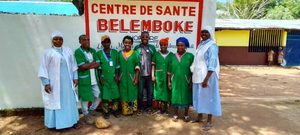
This involvement of professionals from within the local community is a sign of hope. It shows the importance of local training and demonstrates that the people themselves can play an active role in addressing the healthcare needs of their own communities.
However, the growing number of patients has created an increased need for infrastructure, medical equipment, medication, and staff training. Further development of the center is therefore essential to improve the quality of care and to meet the population’s needs in a sustainable way.
In Bélémboké, caring for the sick is one of the concrete ways of proclaiming the Gospel: every life matters, and every person deserves to be welcomed and treated with dignity. Through this daily service, the parish bears witness to a Church that draws close to people, a Church “going forth,” as Pope Francis would put it, especially when illness and difficulties in accessing medical care make their situation all the more precarious.
Integral Human Development: Building Self-Reliance
The mission of Bélémboké also helps create the conditions that enable families to live with dignity, develop their abilities and build a more secure future.
The Dominican Sisters, Daughters of Our Lady of Nazareth support a program to empower women and young girls, offering training in sewing and catering, alongside educational and personal development guidance. These activities enable participants to acquire practical skills that can help them find employment, become self-employed and achieve economic independence.
Beyond learning a trade, these training programs recognise the essential role women play in the development of their families and communities.
Agriculture represents another key pillar of our commitment. In 2025, the church established a cocoa plantation covering approximately five acres in Bélémboké, as well as another plantation in Ndelengué, about 40 kilometres away. It also has approximately three acres devoted to growing corn and cassava.
These activities contribute to food production and offer opportunities for practical training. They aim in particular to strengthen food security, encourage economic self-reliance and develop more sustainable livelihoods.
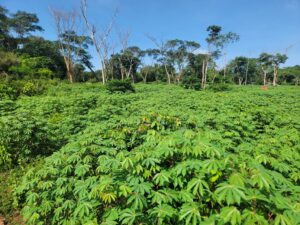
As the cocoa plantations grow, they may also provide longer-term income prospects, depending on yields and market opportunities.
The aim is to go beyond meeting immediate needs. It is to accompany communities as they develop their skills, strengthen their self-reliance and participate actively in their own development.
The goal is to go beyond simply addressing immediate needs. It is about supporting the people in developing their skills, strengthening their autonomy, and have them take an active part in their own development.
This approach reflects the vision that inspired the founding of Bélémboké: human development can only be sustainable when the people and communities concerned are recognised as the agents of their own future.
Continuing the Journey of Hope Together
World Mission Sunday 2026 is an opportunity to give thanks for more than fifty years of missionary presence in Bélémboké and to acknowledge all those who have helped sustain this mission: the Dominican Sisters, Daughters of Our Lady of Nazareth, the collaborators and local staff who serve their communities, as well as the benefactors and partners who have supported this presence over the years.
This story also belongs to the local people themselves, to their perseverance and their participation in the life of the mission. Their commitment remains essential for consolidating what has been achieved and for preparing the future.
Despite the progress made, the needs remain significant. Access to secondary education, the development of healthcare infrastructure, vocational training and stronger food security are among the challenges that call for continued efforts and lasting solidarity.
On this World Mission Sunday 2026, Bélémboké reminds us that the mission of the Church is a shared responsibility. It is fulfilled through the proclamation of Christ, but also through care for people, the defence of their dignity and support for their aspirations.
It is built upon the dedication of missionaries, the participation of local communities and the support of all those who believe in this work.
In Bélémboké, the spirit of the Gospel is expressed in concrete ways: in a classroom where a child learns to read, in a health center where a sick person receives care, in a workshop where a woman acquires a new skill, and in a field where a family builds its future.
After more than fifty years of missionary presence, Bélémboké remains a living witness to a Church that proclaims Christ, defends human dignity and accompanies communities in their aspirations for a better future.
During this World Mission Week, may our prayers and generosity help continue this journey, so that children may learn, the sick may receive care, and families may have ever more solid means to build their future with dignity and hope.
Fr Samuel Hagan, SMA
Parish Priest of Notre Dame des Pygmées, Bélémboké
Archdiocese of Berbérati, Central African Republic
Leave a Reply