
Communicating to evangelize better
by Pierre Paul Anani Dossekpli
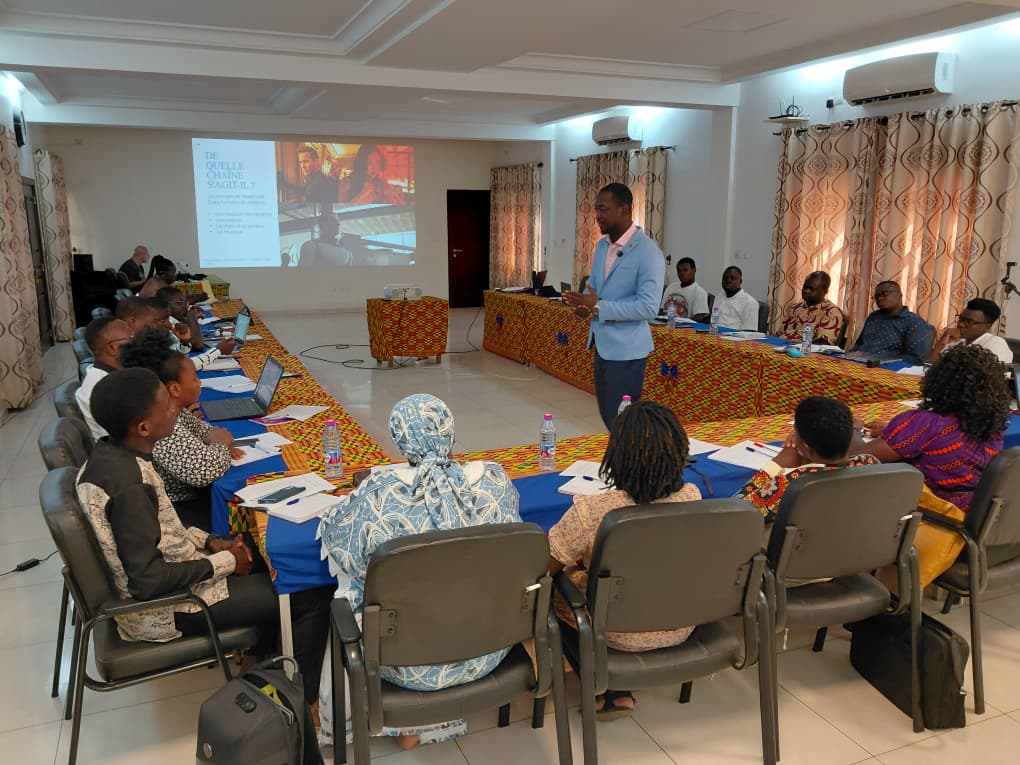
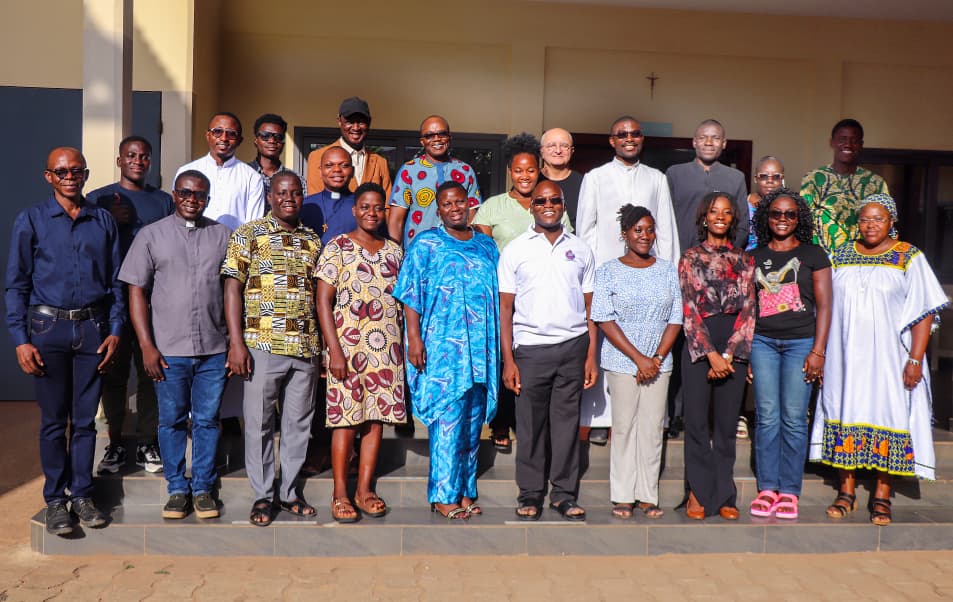
Lomé, 12–17 October 2026. At the SMA Togo provincial house in Klikamé, Lomé, SMA Togo TV held six days of training in collaboration with CREC International (Center For Research and Education in Communication). Twenty participants took part: ten communicators from SMA Togo TV and ten staff members from other Catholic dioceses and media outlets in Togo.
Three trainers, one shared passion
The session was led by three members of CREC International:
- Father Fabrizio Colombo, an Italian Comboni missionary and president of CREC International;
- Mr Charles Ayetan, a Togolese journalist;
- Mr Jacob Konfé Ibrahim, from Burkina Faso.
One goal: communicating better to evangelize better
Father Eric Kpotor, SMA, director of SMA Togo TV, recalled the aim of these days: to strengthen the skills of the channel’s communicators and of the communication officers of Togo’s Catholic dioceses, in order to improve the quality of productions and to make better use of the media in the service of the Gospel.
In his words, opening the training to diocesan communicators aligns with the SMA’s missionary charism, founded on evangelization and collaboration with the local clergy. The channel hopes these participants will relay its content and news, enable some to contribute to its productions, and promote SMA Togo TV in their dioceses. “Our ambition,” he explains, “is to strengthen collaboration between Catholic media and to unite our skills in the service of one mission.”
The training also responds to a recommendation of the SMA’s most recent Plenary Council, held in 2026 in Lagos (Nigeria). Article 84.2 calls for basic training for the media teams of SMA Units in digital and audiovisual communication.
On the program: writing, interviews, reporting, crisis communication, vMix and artificial intelligence
Participants worked on writing for television and the web, interview preparation, reportage, crisis communication, and program production with vMix. They also became familiar with artificial intelligence and AI assistants as support tools. The trainers encouraged them to step out of their comfort zone and try tasks beyond what they usually do.
The trainers’ view
For Father Fabrizio Colombo, the session showed how strong and promising the passion for digital communication is in the African Catholic world. He considers the SMA Fathers’ decision to invest in an online television channel significant: the project is more viable, with far lower costs than conventional television, and content can be shared across several platforms.
He saw in the participants “a wonderful surge of creativity” and a genuine desire for professionalism. Young people want to communicate the Gospel’s message of life and love in new ways, daring to try new formats. The different forms of digital communication tested, including AI support, produced professional-standard results with real communicative quality.
The road is not easy, he acknowledges: “resources are often lacking, but not ideas or enthusiasm.” There is also the challenge of daring to innovate in Catholic communication, which is still often tied to outdated institutional styles. Thanks to the passion of its director, Father Eric, SMA TV can become a medium that renews itself and gives young people a voice, and, above all, a tool for building a genuine network of Catholic media in Togo by overcoming “the temptation for each to tend their own little garden.”
Charles Ayetan, trainer and Togolese journalist, sums up what the session covered: journalistic writing, reporting and interview techniques, AI tools and crisis communication. He said he was amazed by the participants’ strong availability, spirit of solidarity, and friendly atmosphere. He expects the beneficiaries to improve their performance, to produce creative written and audiovisual content suited to their target audiences, and to use AI tools effectively in their respective activities.
What struck them
The trainers’ simplicity and the fellowship among participants came up in almost every testimony. Father Jean Tarbouté, director of Radio Maria Dapaong, was struck by “the simplicity of the trainers and their simple way of teaching,” as well as by the fellowship that prevailed: “it felt as if we had known each other before.” Florence Kouékpassé, journalist and presenter at SMA TV, praised their humility: despite their expertise, they shared their knowledge with teaching skill, openness and availability. For Father Moïse Dadja, head of communications for the Diocese of Sokodé, the trainers were “eager to give the best of themselves,” and the participants were eager to receive in order to do better.
Priests, like everyone else, received a fraternal welcome. Father Gilles Gaba, a member of the Diocese of Kpalimé’s mass media team, was touched by the atmosphere between participants and trainers, who were “very open and accessible” and created a climate of trust conducive to exchange. He was also struck by the simplicity of the priests who were present: “The cassock was no obstacle,” he says, as the priests threw themselves into the work with the same energy as everyone else. He commends the quality of the welcome from the SMA Fathers, and the humility, simplicity and approachability of their Provincial.
An atmosphere that makes you want to come back. Samuel Adaya, a technician at SMA Togo TV, was surprised by many things, beginning with the atmosphere: “it was so comfortable that every day you wanted to come back the next day to continue.” He also said he was surprised by everything he was able to learn during the training.
Spontaneity, humility, team spirit. Ayélé Prisca Folly, a presenter on the Jeunesse catholique TikTok page of the Archdiocese of Lomé, singled out the participants’ spontaneity and commitment, and the practical nature of the training. Paul-David Agbessi, a camera operator at SMA Togo TV, was struck by everyone’s humility, participants and trainers alike, and by the team spirit.
Jacob Konfé Ibrahim, one of the trainers, was also pleasantly surprised by how easily the participants handled the group exercises, “as one man, as if they had been working together for years.”
Artificial intelligence, a tool in the service of the Word. Christian Foli Amah-Tchoutchoui, journalist and host at SMA Togo TV, discovered that tools once thought threatening to the Word can become its best carriers: “everything depends on the conscience that holds it. Like the griot’s drum, it can lead astray or awaken.” He also takes away that crisis only destroys those who stay silent or lie, and that the Gospel has not grown old: it is the way of telling it that must be reborn. Florence Kouékpassé intends to use AI while preserving her critical thinking and professional responsibility. Augustine Pali, from the Diocese of Kara, wants to build it into her productions “in an ethical way” to save time. Paul-David Agbessi takes away that AI will not replace communicators, but will help them go faster in their daily tasks.
What will change in their work
- Christian Foli Amah-Tchoutchoui no longer sees himself merely as a broadcaster of events, but as “a sower of meaning.” He will dare to try shorter, livelier, more embodied formats, to reach those who no longer come to church but “still scroll.”
- Florence Kouékpassé will rethink her writing for television and the web, prepare her interviews better and build more relevant reports.
- Olivia Segbedji, a presenter for the CENCCS (National Catholic Episcopal Council for Social Communications), will sharpen her opening lines and edit her own videos.
- Augustine Pali will diversify her productions with podcasts.
- Samuel Adaya, a technician at SMA Togo TV, will now be able to use AI properly, create a podcast himself and design formats for his work.
- Ayélé Prisca Folly, presenter on the Jeunesse catholique TikTok page, says her presentations “will no longer be done from the same angle.”
- Paul-David Agbessi, camera operator at SMA Togo TV, now sees the digital world differently and will be better able to decide what to publish and what not to publish.
- Father Gilles Gaba, of the Diocese of Kpalimé, has deepened what he was already doing and discovered new tools and methods. He leaves with concrete ideas and renewed motivation to put communication more fully at the service of evangelization.
- Father Jean Tarbouté, who has only recently entered the world of the media, will draw on this training to guide the activities of Radio Maria Dapaong and improve his performance.
- Father Moïse Dadja will gradually integrate this new knowledge into his mission, especially on social media.
CREC International, a long history
CREC International has its roots in the 1960s, when the French Oblate priest Pierre Babin began to explore the religious dimension of the worldwide communications revolution. In 1971, he founded CREC-AVEX in Lyon (Research and Teaching Center in Communication, Audiovisual and Faith Communication) to train future communication leaders regardless of their Church or country of origin. This ecumenical, experience-based approach continues to inspire its training programs.
A seed sown
For Jacob Konfé Ibrahim, the hope is that the idea of the AI agent or assistant will touch some participants’ hearts, so they use it to optimize their work. The testimonies point in that direction: Samuel Adaya leaves able to create podcasts and formats himself, and Christian Foli Amah-Tchoutchoui with a duty: that the Word be not merely broadcast, but “retained, shared and lived.” Father Fabrizio Colombo voices the same wish for all of Togo’s Catholic media: “to be united in carrying one single great message.”
Photos SMA Togo Tv
Leave a Reply