
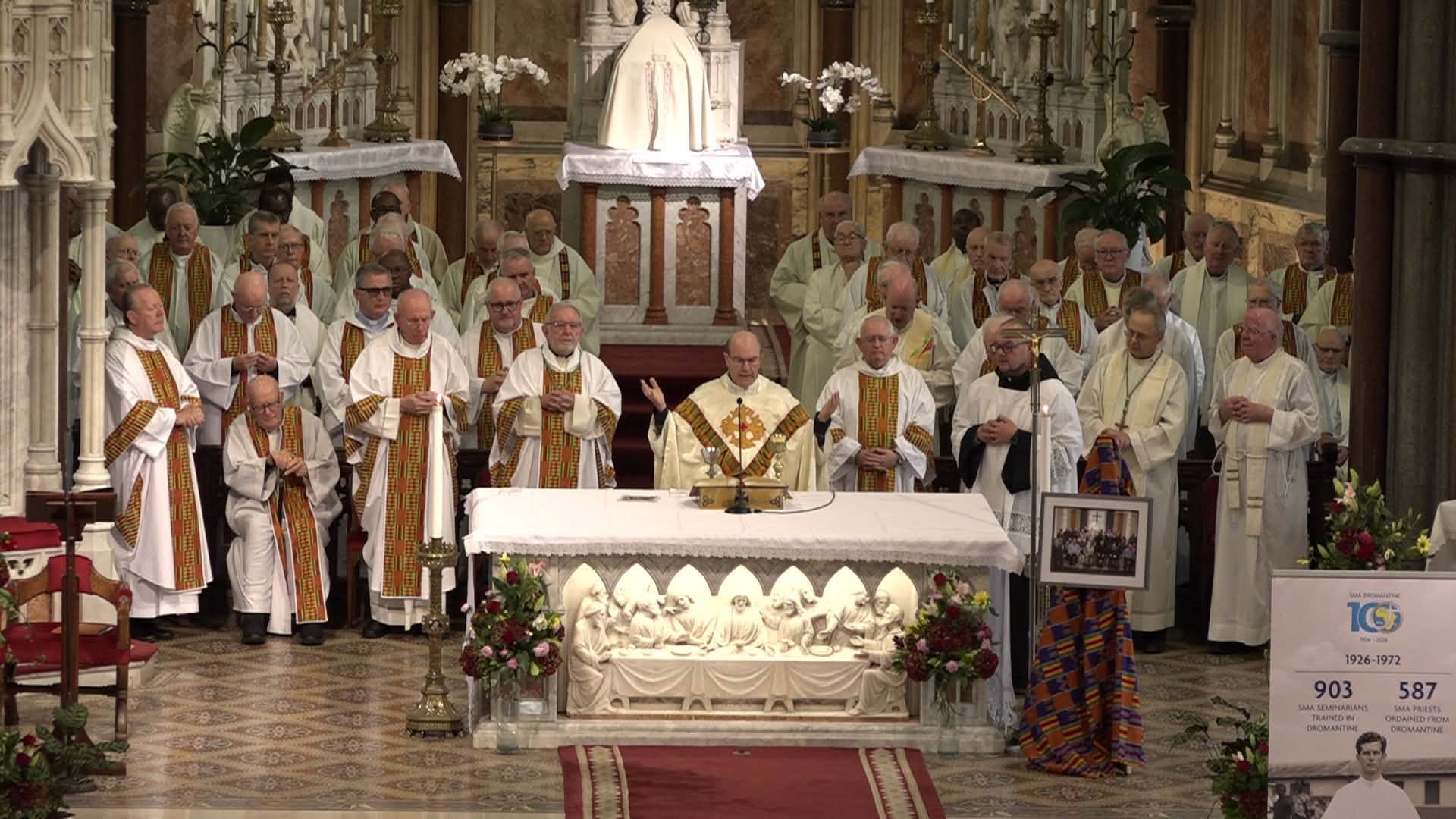
This year marks a century since the SMA made Dromantine its home. On 21 September 1926, 47 seminarians arrived from the SMA seminary at Blackrock Road in Cork. Eight days later, on 29 September, Dromantine was officially opened as a major seminary.
It was the beginning of a remarkable chapter.
The decision to establish the seminary at Dromantine came at a time when the SMA Ireland was growing and its existing facilities could no longer accommodate the increasing number of students seeking to join the Society. Fr Morris Slattery, then SMA superior in Ireland, had searched extensively for a suitable location. When those efforts proved unsuccessful, he turned to prayer, organising a novena in January 1926. Within months, an opportunity emerged to purchase Dromantine House. With the necessary permissions and renovations secured, the SMA moved its students into the new seminary.
What followed was almost half a century of missionary formation. Between 1926 and 1972, Dromantine helped prepare generations of men for missionary priesthood. During its years as a major seminary, 587 students were ordained, many of whom were subsequently sent to serve in countries including Egypt, Nigeria, Ghana, Zambia and Liberia.
For the SMA, Dromantine was therefore far more than a seminary building. It became one of the places from which missionaries were equipped to cross borders, cultures and continents in response to the Church’s missionary calling.
But the story of Dromantine did not remain unchanged. The changes brought about by the Second Vatican Council led to a significant rethinking of priestly formation. Greater attention was given to human, spiritual and pastoral development, and SMA students gradually moved into mainstream seminary formation. The transition began in 1969, with the final classes leaving Dromantine in 1972.
The story of Dromantine, however, did not end when the seminary closed. Dromantine was entering a new chapter.
Following extensive renovation, the house was transformed into a retreat and conference centre and officially reopened in 2001. Its purpose had changed, but its doors remained open. Dromantine began welcoming a much broader community of people seeking space for prayer, reflection, formation, meetings and community life.
Its connection with the SMA’s missionary heritage also remained visible. In 2005, the African Link was created, displaying African carvings and artwork and highlighting the longstanding relationship between Dromantine and the SMA’s missionary presence across Africa.
Over the years, people have continued to come to Dromantine for many different reasons. Some arrive for retreats and quiet reflection. Others take part in meetings, formation programmes or community events. Families and young people have also become part of the house’s story through initiatives such as Dromantine Sunday, the annual open day and summer camps.
The Family Vocations Community has further strengthened the relationship between the SMA and its supporters, encouraging lay people to take an active part in sustaining missionary vocations and the wider work of mission.
In this way, Dromantine has retained something of its original character while continually adapting to new circumstances. The seminarians may no longer walk its corridors as they did a century ago, but the house remains closely connected with formation, prayer and the missionary life of the SMA.
And while a centenary naturally brings attention to buildings, dates and historical achievements, the story of Dromantine is ultimately a story about people.
Thousands of missionaries, staff members, volunteers, benefactors, families and visitors have contributed to the life of the house. Each generation has left its mark, helping to shape Dromantine as it is today. Some passed through as seminarians preparing for missionary priesthood. Others came as friends, guests, supporters or members of the wider SMA family. Many have memories of significant moments in their lives that are inseparably connected with this place.
This centenary is also an opportunity to recognise the staff who continue to care for Dromantine every day. Much of their work happens quietly and away from public attention, but their dedication ensures that the house remains ready to welcome those who come through its doors. After a hundred years, that spirit of hospitality remains one of Dromantine’s most recognisable features.
The anniversary therefore provides an opportunity not only to look back, but also to appreciate how far the house has travelled. Dromantine has moved from being a country house to a major seminary, from a centre of missionary formation to a retreat and conference centre, and from a place primarily associated with SMA seminarians to a house welcoming a much wider community.
Its history is also inseparable from the history of the missionaries who left its doors and travelled to Africa and beyond. Their lives became part of the history of the SMA and of the communities they served, carrying with them the formation, faith and missionary spirit that had marked their years at Dromantine.
Today, a century after the first seminarians arrived, Dromantine continues to welcome people seeking prayer, reflection, community and renewal. The building has changed. Its role has evolved. The people who pass through its doors are different from those who arrived in 1926.
Yet something essential remains.
Dromantine continues to be a place where people gather, where faith is nurtured, where stories are shared and where the missionary spirit of the SMA remains present.
And on this special centenary day, with the sun shining over Dromantine, there was good reason to celebrate, not simply 100 years of a building, but 100 years of people, stories and missionary history woven into one very special place.
Brice Ulrich AFFERI

Leave a Reply