
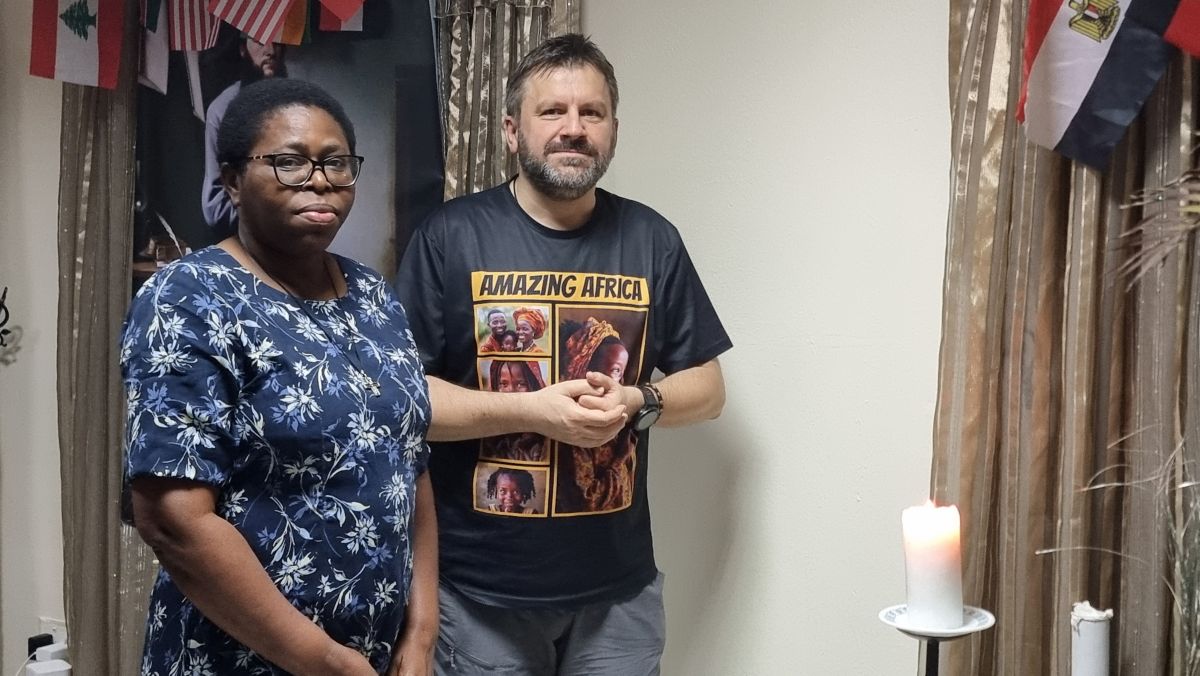
SMA and OLA Rediscover the Heart of Their Mission
A session from the Triple Jubilee celebrations, 2 June 2026
By Pierre-Paul Dossekpli
The question “Should SMA and OLA collaborate?” may seem reasonable. But during a landmark session of the Triple Jubilee celebrations on 2 June 2026, both superior generals made a quietly radical case for setting it aside altogether — because it starts in the wrong place.
The real question, they suggested, is not whether to collaborate, but whether we understand what mission is. And if we do, collaboration is not a conclusion we reach. It is where we begin.
Mission is Relational by Nature
Sr Mary T. Barron, Superior General of the Our Lady of Apostles (OLA), opened with a reflection that reframed the entire conversation. Her talk, The Call to Collaboration as a Call to Mission, did not argue that collaboration is important, beneficial, or even necessary. It argued something more fundamental: that mission, rightly understood, cannot be anything other than collaborative.
Her starting point was the Missio Dei — the conviction, central to contemporary missionary theology, that mission does not originate with us. Mission is God’s own movement toward the world, and we are invited to participate in it. But God, as Trinity, is relational at the core. Father, Son, and Spirit do not act in isolation; they exist in communion. If mission is participation in this Trinitarian life, then a solitary, self-sufficient approach to mission is not simply inefficient — it is, at a deeper level, a contradiction in terms.
From this flows everything. Quoting theologian Stephen Pickard, Sr Mary described collaboration as “a practical demonstration of Gospel-shaped relationality” — not a technique, but a visible expression of what the Gospel actually is. Pope Francis’s understanding of synodality as “a style, a spirituality, a way of being Church” reinforced the point: walking together is not a method adopted for pastoral convenience. It is the shape that faithful mission takes.
This is why Sr Mary insisted on moving beyond the language of complementarity — which still implies two self-contained entities that happen to fill each other’s gaps — toward reciprocity: the recognition that SMA and OLA “carry the same charism in different bodies, histories, and expressions, and that each enriches the other.” Reciprocity is mutual by definition. It cannot be one-sided, delegated, or optional.
She outlined five conditions for this to become reality: a shared understanding of co-responsibility (not merely coordinating calendars); a spirituality of mutual listening; the courage to share and bestow power across hierarchies and cultures; intercultural competence as a synodal skill; and a shared narrative of mission — because, as she put it simply, “if we narrate mission separately, we will act separately.”
Written into the DNA from the Start
If Sr Mary provided the theological argument, Fr François du Penhoat, Superior General of the Society of African Missions (SMA), provided the historical one — and it was equally arresting. His presentation, Moving Forward Together — SMA and OLA at the Service of the Kingdom, showed that relational mission is not a modern ideal grafted onto the two congregations. It is their original design.
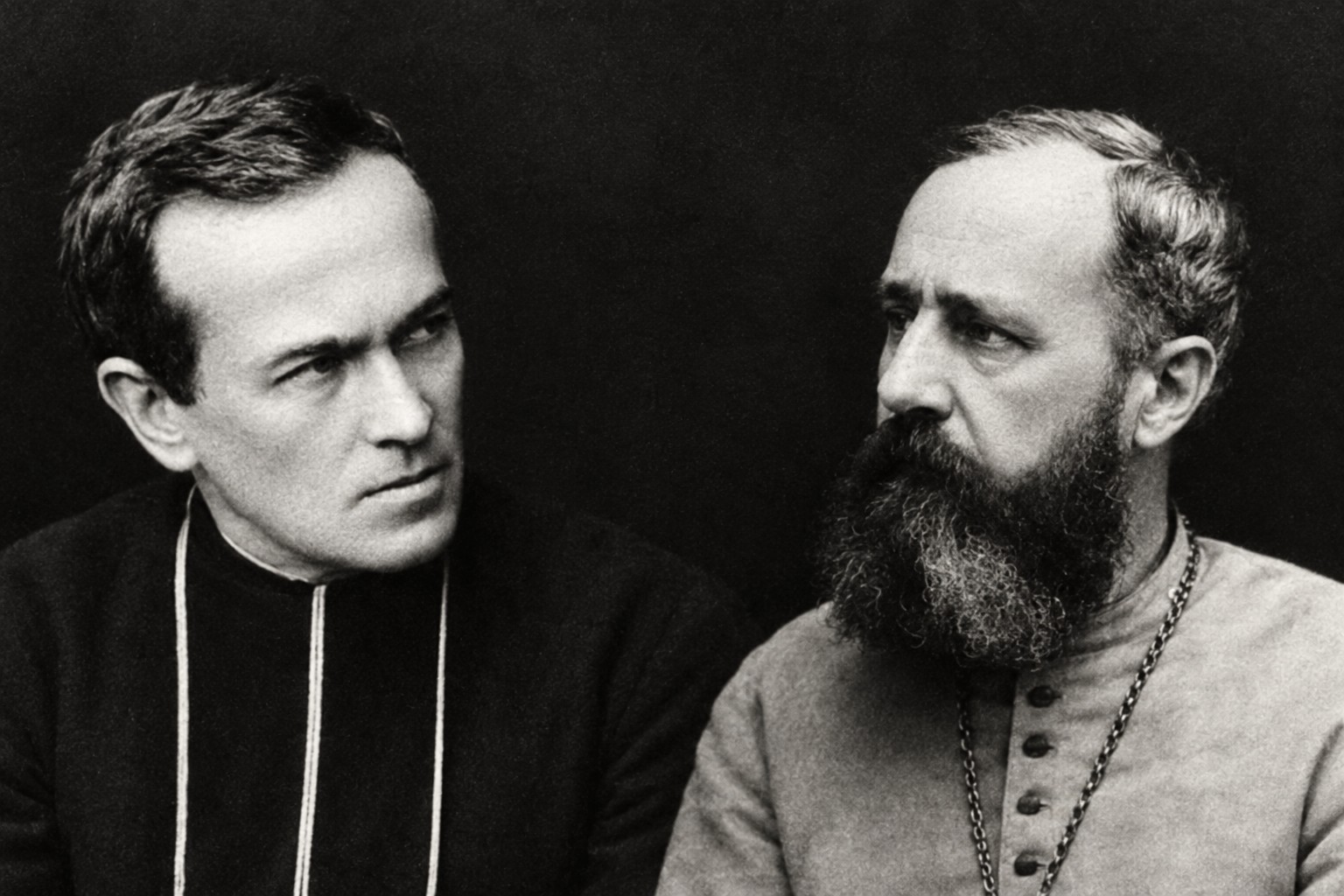
As early as October 1856 — before either congregation had fully taken shape — Bishop de Brésillac was already writing of his hope to “prepare from a distance a common action” with women religious. Fr Augustine Planque, who would carry the founders’ vision forward, was equally explicit: Church planting in Africa, encompassing health, education, and evangelization, was inconceivable without the participation of sisters. Collaboration was not Plan B. It was the plan.
Fr François did not, however, idealize what followed. He named honestly the difficulties that have marked SMA-OLA relations over the generations: lack of respect for each community’s autonomy, financial misunderstandings, prejudice, and the recurring tendency — captured in a phrase that drew knowing recognition — for one side to “set a train in motion and ask the other to hitch their wagon to it.” These are real failures, and naming them matters. But they are failures against the original vision, not evidence that the vision was wrong.
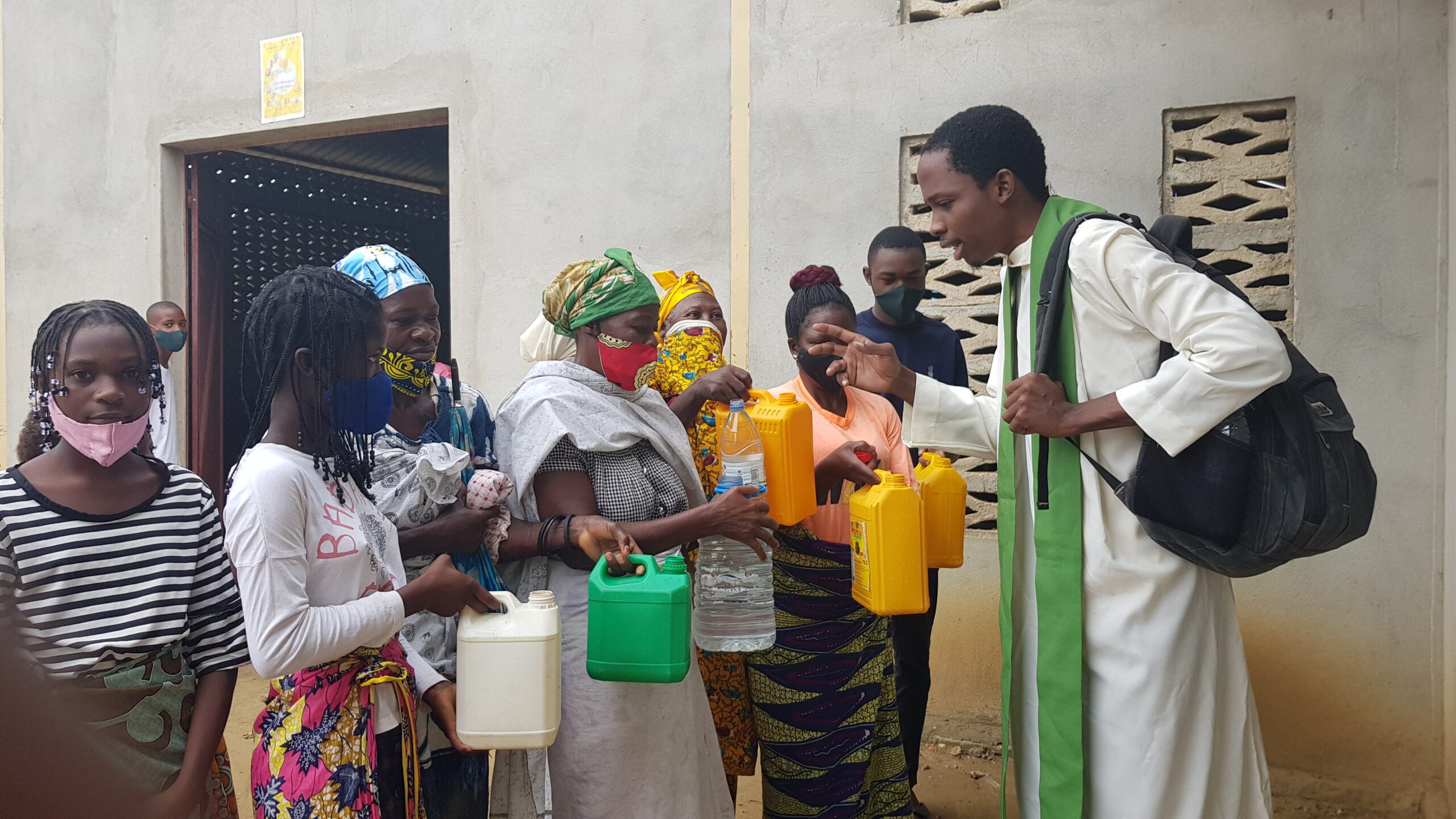
Against these shadows, Fr François set personal testimonies of what genuine collaboration looks like when it takes root: in mission in Bariba Country in northern Benin, and in the parish of Vaulx-en-Velin in France, where a contract was signed jointly with the Archbishop and sisters and fathers worked, prayed, and went on outings together. What emerged in both cases was not merely more effective ministry, but something he named with precision: converting together — a “mutual belonging” in which OLA sisters are genuinely “our sisters,” not external partners.
His conclusion was a forward-facing one: “Being Together” and “Doing Together” — complementarity of persons, shared discernment of mission priorities, and openness to new frontiers such as ministry among migrants.
Conversation in the Spirit
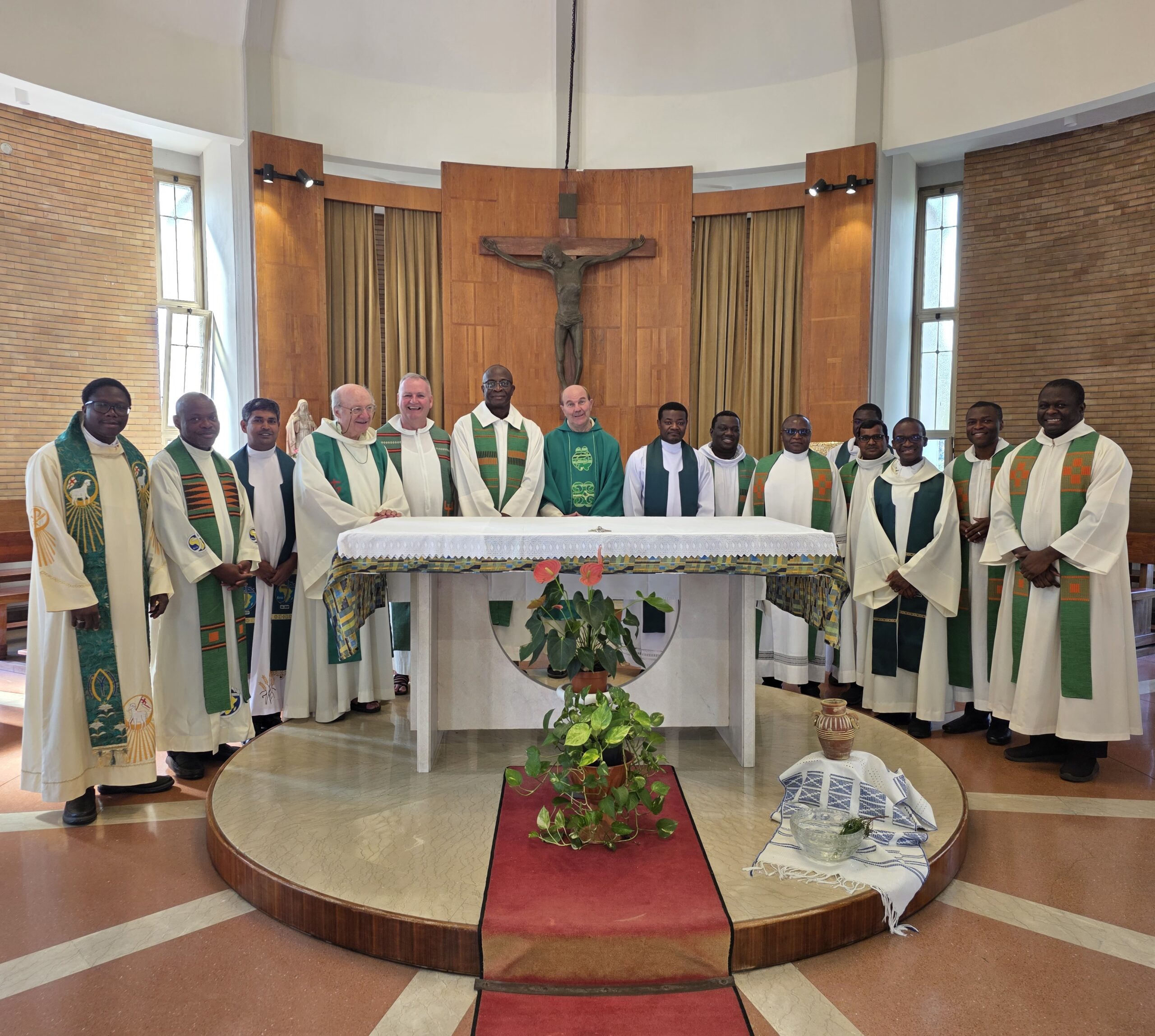
Following both presentations, participants entered into a Conversation in the Spirit — a structured form of communal discernment in which each person speaks not to debate but from a place of interior listening. The method, familiar from recent synodal gatherings across the Church, embodies precisely what both speakers had described: an attentiveness to what the Spirit is saying through the other, a willingness to be changed by what one hears.
The Question that Remains
What emerged from this session was not a program or a resolution. It was something more searching: an invitation to SMA and OLA members everywhere to recognize that the question of collaboration has already been answered — by the founders, by the theology, by the shape of the Trinity itself. The remaining question is whether we will live accordingly.
Yet living this vision requires more than goodwill or renewed commitment. It calls for genuine cultural transformation — a patient work of uncovering the assumptions, habits, and power dynamics that quietly shape how SMA and OLA actually relate, beneath their stated values.
The organizational culture framework of Edgar Schein offers a rigorous lens for this: distinguishing between visible practices, espoused values, and the deeper basic assumptions that ultimately drive behavior. Research into shared history and the intentional formation of values for healthy collaboration may be the next frontier.
“Collaboration is not simply something we do. It is something we become.”
Leave a Reply