
By Pierre-Paul Dossekpli
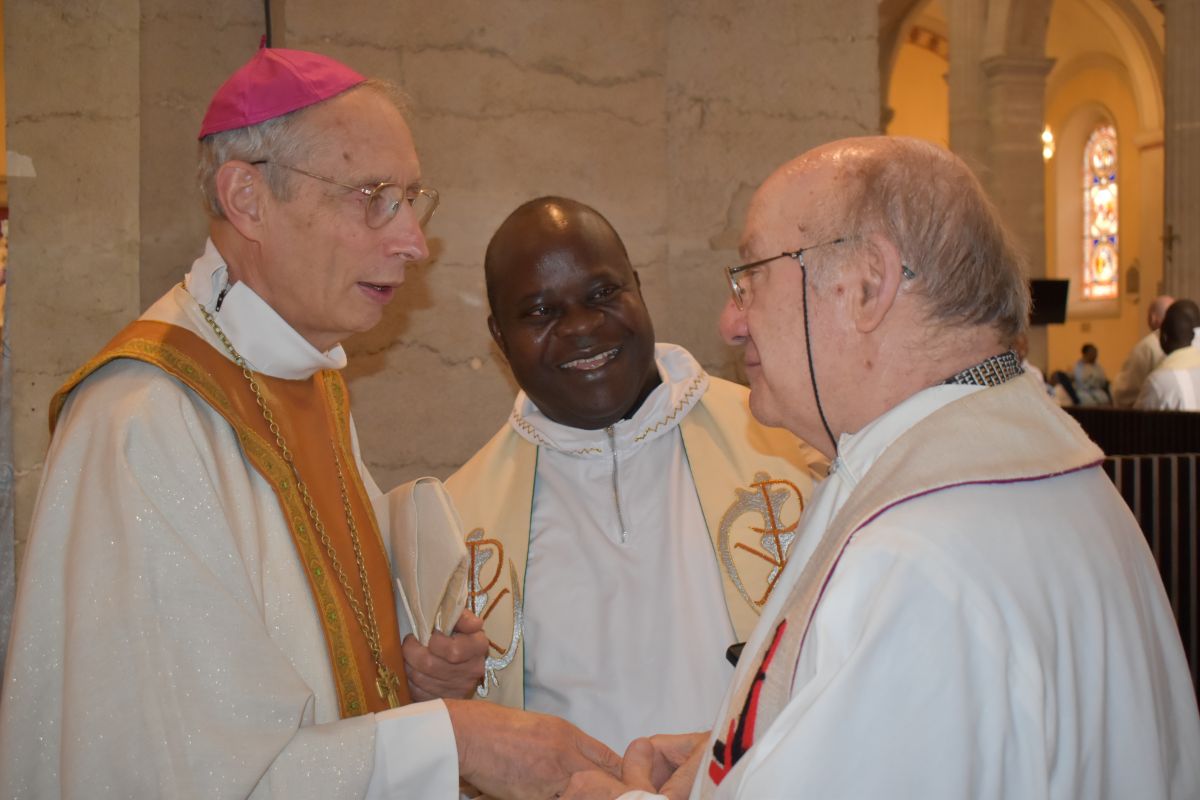
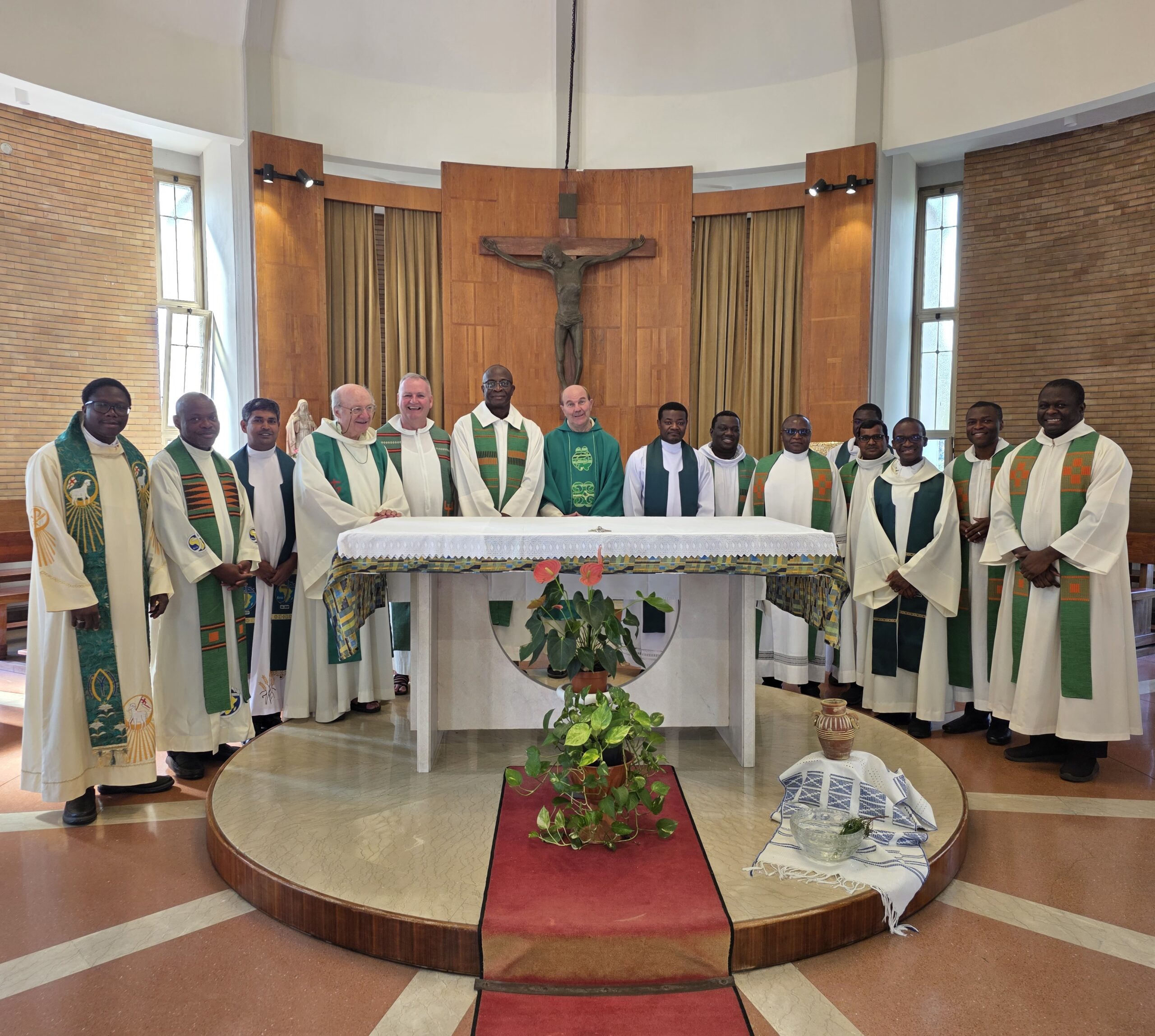
Lyon, 27 July 2026 — It was in the church of Notre-Dame Saint-Louis de la Guillotière, in Lyon, that the fifth day of celebrations of the Triple Jubilee of the OLA-SMA missionary family took place this Monday. On the programme: a conference by Fr Andrea Mandonico on the two founders, followed by a Eucharist presided over by Bishop Patrick Le Gal, auxiliary bishop of Lyon and episcopal delegate for Consecrated Life.
A triple anniversary, a place steeped in history
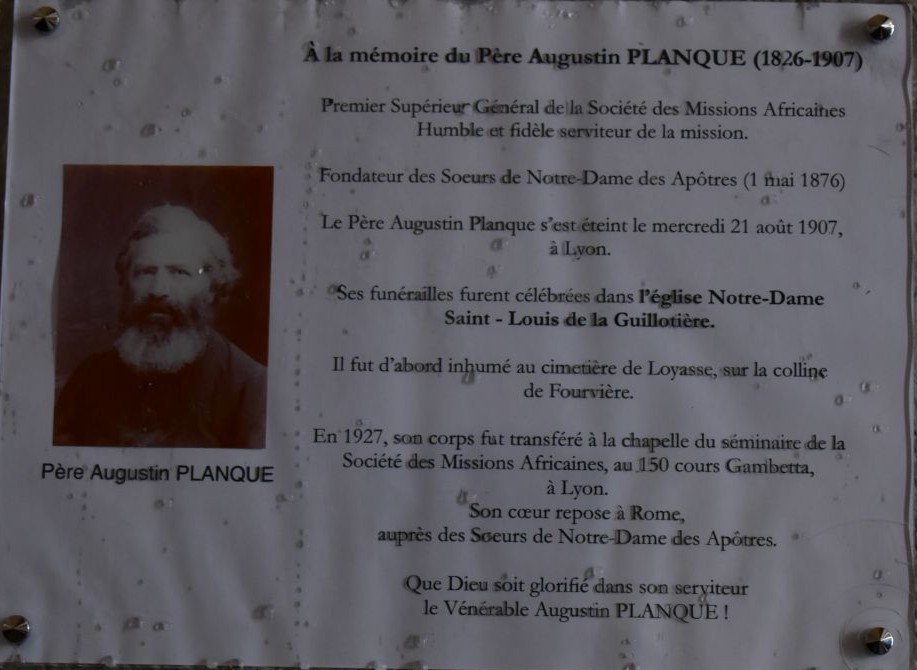
This stage of the jubilee celebrates three anniversaries: the 150th anniversary of the founding of the Institute of the Sisters of Our Lady of Apostles (OLA), the 170th anniversary of the founding of the Society of African Missions (SMA), and the 200th anniversary of the birth of Fr Augustin Planque, first Superior General of the SMA and founder of the Sisters of Our Lady of Apostles.
The choice of the church of La Guillotière is no accident: it was here, in 1907, that the funeral of Fr Augustin Planque was held. The parish — which today brings together three churches under the patronage of Blessed Antoine Chevrier, whose bicentenary of birth the archdiocese of Lyon is also celebrating this year — is also home to the OLA Sisters’ community of La Guillotière.
After celebrations held in Lille (Fr Planque’s home diocese), in Chemy (his native village), and then in Vénissieux (the Institute’s founding site, where a chapel was dedicated to the 19 Martyrs of Algeria, among them two OLA sisters, Angèle-Marie Littlejohn and Bibiane Leclerc), this day at La Guillotière thus brought the journey full circle: from the founding site to the founder’s burial place.
Fr Andrea Mandonico’s conference: the story of a providential encounter
Archivist and postulator of the SMA, Fr Andrea Mandonico opened the morning with a conference retracing the encounter between the two founders. He began by recalling the troubled context of the late nineteenth century — revolutions, anticlerical governments, the rupture of the Concordat in 1905 — a period which paradoxically saw a genuine missionary awakening, carried by figures such as Libermann, Lavigerie and de Foucauld.
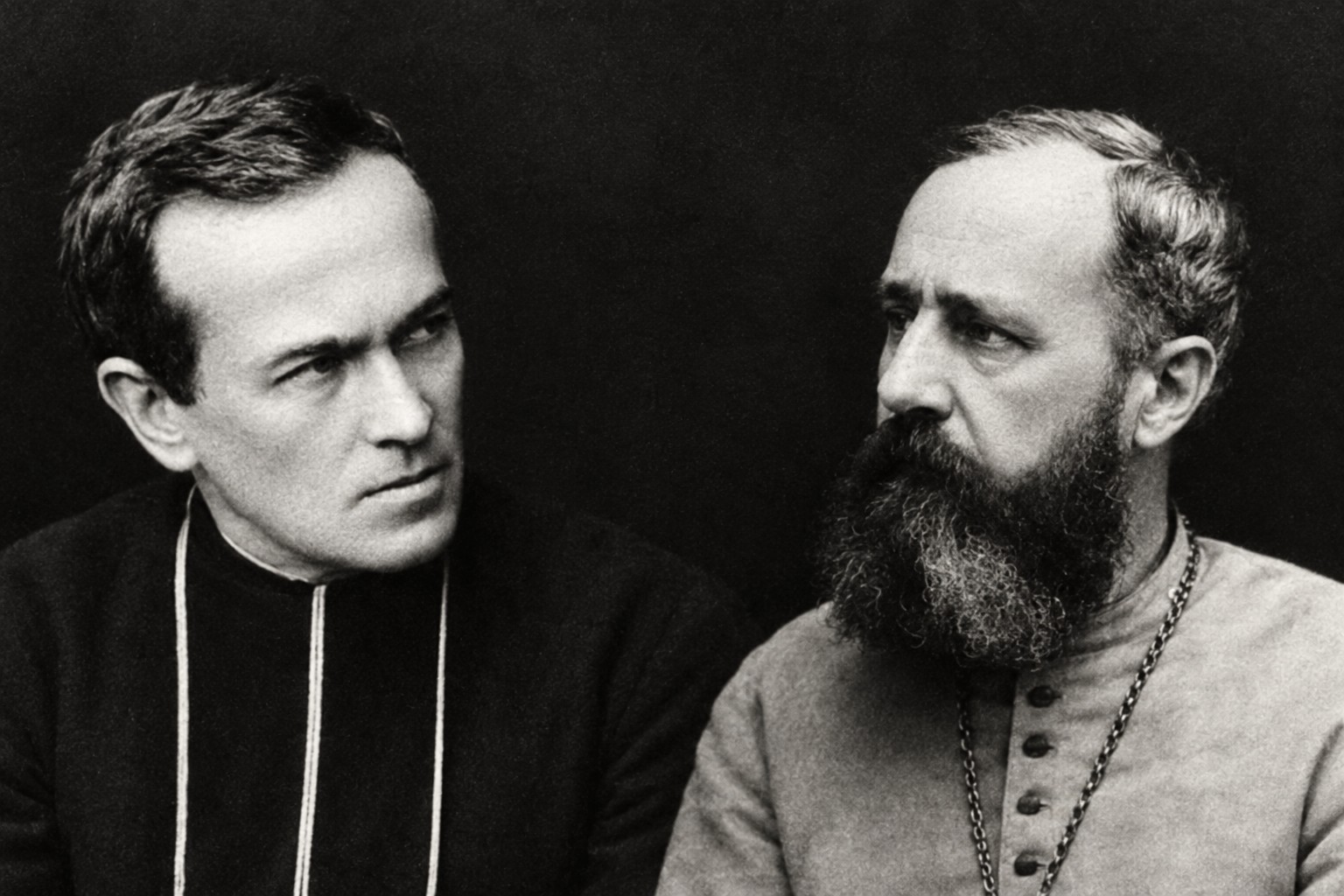
He then drew the portraits of two men whom everything seemed to set apart. Bishop Melchior de Marion Brésillac, born in 1813 in the south of France, former apostolic vicar of Coimbatore in India, founded the Society of African Missions in Lyon on 8 December 1856, after an already long and difficult missionary experience. Fr Augustin Planque, born in 1826 in Chemy into a modest family from the north, the eldest son destined to take over the family farm before being taken in by an aunt and directed toward the seminary, had no missionary field experience of his own — but had the invaluable experience of teaching and forming seminarians.
Their meeting came about through the press: in March 1856, Planque discovered, in the newspaper L’Univers, an article by Bishop de Brésillac calling on priests to place themselves at the service of the African missions. After an exchange of letters, Planque joined Brésillac in Lyon on 7 November 1856.
Fr Mandonico emphasized the immediate and growing trust between the two men. Appointed superior of the seminary at once, Planque became the trusted collaborator to whom Brésillac entrusted the running of the Lyon house before his departure for Africa. When Bishop de Brésillac died of yellow fever in Freetown on 25 June 1859, only months after his arrival, it was Planque who took up the work, faithful to a promise the founder had made him before embarking: that the Society would live “as long as there is a will to sustain it” — and that this will would be his.
Fr Planque carried this responsibility until his own death in 1907, serving nearly fifty years as Superior General: building the seminary, tireless fundraising to support the missionaries, drafting the Constitutions, and dealing with a civil authority that was often hostile. It was also he who, faced with the difficulty of finding a women’s congregation willing to commit to the missions, founded the Sisters of Our Lady of Apostles in 1876; the first sisters arrived in Dahomey in 1878, before the congregation extended to Egypt and Algeria.
The speaker concluded by quoting a confrere who described Planque as “a true missionary”, driven by an apostle’s zeal and the strength of character to overcome every difficulty, devoted to his two religious families to the very limit of his strength. For Fr Mandonico, the key to this legacy lies in a single word: the trust that Bishop de Brésillac placed in Planque — a trust that history, 150 years on, has amply vindicated.
The welcome address: gratitude and fellowship
It was Sr Joséphine Arthur, OLA, originally from Ghana and on mission in France, who opened the celebration with the welcome address, on behalf of the Sisters, the Fathers of the Society of African Missions, and the organizing team. She welcomed the presence of Bishop Patrick Le Gal, as well as all the priests, religious, families, friends, benefactors and parishioners who had come for this Eucharist of thanksgiving, expressing the hope that Fr Augustin Planque and Blessed Antoine Chevrier “intercede for each one of us, for our families, for our communities, and for the mission of the Church.”
Bishop Le Gal’s homily: tenacity, resilience and boldness
In his homily, Bishop Patrick Le Gal reflected on his own journey in preparing for this celebration, describing his discovery of the figure of Fr Augustin Planque. He highlighted the qualities that, in his view, marked the founder’s path: tenacity in the face of discouragement, resilience to rise again despite unprecedented difficulties, and boldness in committing to a demanding path. To these three traits, the bishop added a fourth dimension, fundamental in his eyes: trust in God.
The homily also spoke of the power of God at work through humility and self-emptying rather than through any human display of strength, inviting the assembly to grow in that same humility in order to better manifest love.
Testimonies from around the world
The day brought together pilgrims and members of the missionary family from several countries, each bearing witness in their own way to what this spiritual heritage means to them.
Maria Sagrario, from Spain, praised a “very interesting” conference and an atmosphere of fellowship she described as extraordinary, speaking of the strength with which the charism of Bishop de Brésillac and Fr Planque, in her view, continues to bear fruit in Africa.
Sandrine Grossmann, from Strasbourg, a mother of two sons involved in pastoral work alongside the SMA and OLA — in particular with Sr Paulette Modzinou, OLA, originally from Togo — described how her connection with the missionary family grew naturally, especially since the arrival of Fr Bernardin in her parish. She described the fathers and sisters of this family as “spreaders of joy.”
Sr Agnès Gyima, an OLA sister originally from Ghana and on mission in Botswana, shared that this day had given her a new and deeper understanding of Bishop de Brésillac’s character and the trust he placed in Fr Planque to carry on his work. She spoke of her emotion at being, as a “daughter of the soil,” present both at the founding sites and at the site of the founder’s funeral. Reflecting on her missionary experience in Botswana, she recalled the difficult early days when the sisters were not easily accepted by the local population, before it gradually came to recognize their wish to contribute rather than to take.
Sr Juvénile Yévidé, originally from Benin and on mission in Niger, expressed her gratitude to Bishop de Brésillac and Fr Planque for having welcomed the mission, recalling that “mission is received.”
The afternoon: in the footsteps of Pauline Jaricot and at Fourvière
The afternoon was devoted to a time of fellowship and group visits: None (afternoon prayer) at Notre-Dame de Fourvière, followed by a visit to the House of Pauline Jaricot, the Museum of Christian History in Lyon (l’Antiquaille), and finally the Basilica of Fourvière itself.
A day of thanksgiving
Between a historical conference, the Eucharistic celebration, and living testimonies of the mission today, this Lyon stage of the Triple Jubilee brought together the memory of the founders and the living vitality of the OLA-SMA missionary family, present today on several continents.
Leave a Reply