


At the end of his canonical visit to Great Britain, Fr. François du Penhoat, Superior General, shares his impressions: a fraternal atmosphere, well-kept houses, welcoming bishops. He also sees it as an invitation to make missionary creativity the guiding principle of the years to come.
By Pierre-Paul Anani Dossekpli
The day after the centenary celebrations of Dromantine, Ireland, the Superior General devoted a fortnight, at the end of September 2026, to meeting with the confreres and bishops of the Province of England. This canonical visit responds to Article 83.3 of the Constitutions and Laws, which asks the Superior General and his Council to ensure that “each Entity of the Society, as well as each jurisdiction where members work, is visited at least once during their term of office”. Elected at the 2025 General Assembly (GA2025), he saw an opportunity to get to know the confreres and appreciate their work. “It is a pleasure to see confreres who give themselves to their mission,” he confides.
A visible fraternity
He says he was struck by the atmosphere: “fraternal,” built on collaboration and an awareness of being a group on a human scale. Alongside the British confreres, missionaries from the Central African Republic, Ghana, India, Ireland, the Democratic Republic of Congo, and Zambia serve in the province: an internationality lived on a daily basis. The province has also led an effort to reorganize its houses: three SMA houses, well-kept and in good condition. Finally, it remains one of the Society’s main financial contributors and is ready to continue. The 2025 GA thanked the former Entities for “their contributions and their long-standing support” (GA2025, n.31).
Overall, the SMA Superior General says the province “gives the impression of being in good health” and can continue contributing to the life of the entire SMA.
Simple and fraternal bishops
Among others, Father du Penhoat met with the Archbishops of Westminster and Salford. He remembers their simplicity and fraternity: “We were on an equal footing,” he said, in a very free exchange. In his view, the two bishops are open to the presence of the SMA and want it to be long-term. This wish is in line with the orientations of the Assembly: The Superiors ensure that the members incorporated into an Entity remain in mission for at least six years, except in exceptional cases, “for the good of the Entity, the diocese and the mission” (GA2025, n.48), and the closing speech invites us to “last longer in mission in order to be able to contribute more of our missionary specificity”.
A land of sending
Speaking of missionaries, remember that England, throughout its history, has been a sending country. For example, in the eighth century, Saint Boniface (675 – 754), a native of Wessex, became the apostle of Germany. Monks and nuns from England joined him, and he founded a missionary center in Amöneburg to train a local clergy.
In 1579, the Jesuit Thomas Stephens, born in Wiltshire, landed in Goa. He composed the Kristapurana, a biblical narrative in Marathi-Konkani verse, in his listeners’ language and poetic forms, and published the first book printed in Konkani.
In 1866, Herbert Vaughan founded the first Catholic missionary society in England at Mill Hill. By 1960, it had 1,200 missionaries on four continents.
To date, members of the SMA from Great Britain are serving on mission in various places. For example, Fr. Gareth Jenkins, a member of the Society since 1971, is in Liberia, while Fr. Patrick N. McGuire, a member since 1986, is in Zuni Pueblo, New Mexico (USA).
Inventing new ways of living the mission
It is within this heritage that the Superior General’s reflection takes shape. The parishes receive attentive, traditional pastoral care. He sees this as a solid foundation for moving forward: “We are missionaries,” he reminds us, and this identity applies wherever we are. The “how” remains to be worked out, with an eye to the future—a challenge for the entire SMA today.
In fact, according to the GA2025, “We must invent new ways of living the Mission”, being “attentive to the people, especially to those who do not believe or to the most abandoned […] this is our DNA”. It proposes making our parishes, groups, friends, and families “communities of missionary disciples” (GA2025, n.73). Fr. du Penhoat suggests that Christians, already integrated into the world, must be helped to become witnesses and to make each community a missionary community. For him, priests have a role of accompaniment, in addition to that of the laity.
The GA2025 provides a concrete framework to accompany this reflection (GA2025, nn. 71 and 79): each Entity examines its missionary commitment to develop new methods, in dialogue with the local Church, and then reports to the mid-term Plenary Council (in 2028).
Deepening fraternity
With confreres from different cultures, the province lives out, day to day, what the General Assembly calls “unity in diversity”. Its conclusion is an invitation: to deepen fraternity. The General Assembly encourages “praying, eating and relaxing together” (GA2025, n.87). On this basis, the province can grow its missionary spirit, following in the footsteps of Boniface, Stephens and the Mill Hill missionaries.
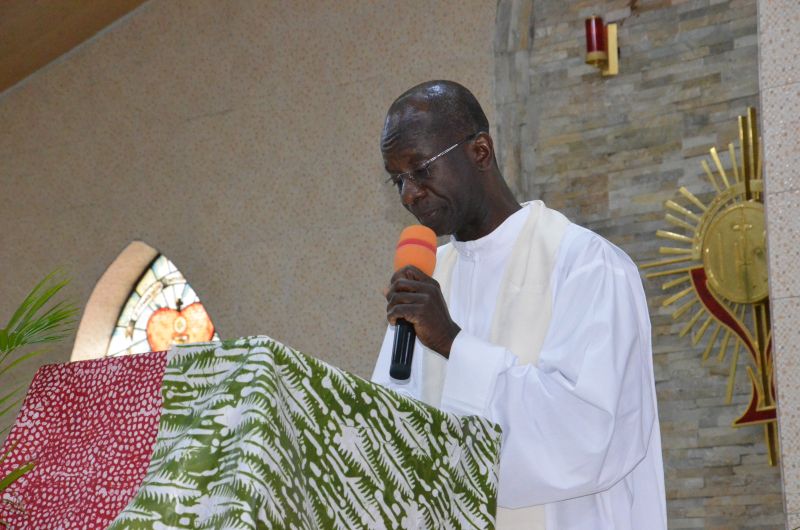
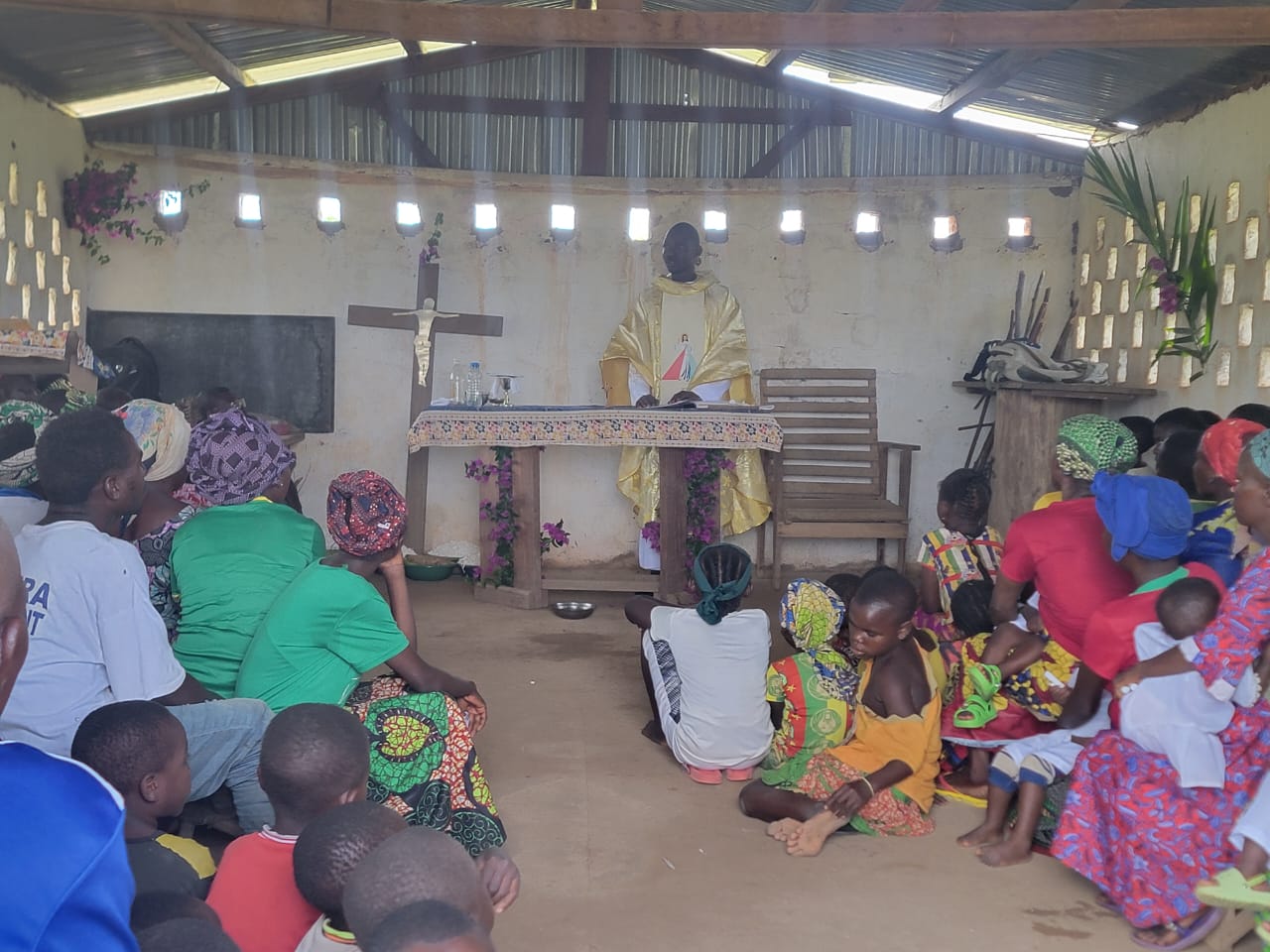
Photo: Fr Samuel Agbeme, SMA, Provincial Superior of Great Britain, during a Eucharistic celebration at the 2026 Plenary Council. (Photo: SMA Media Centre Archives)
Leave a Reply