
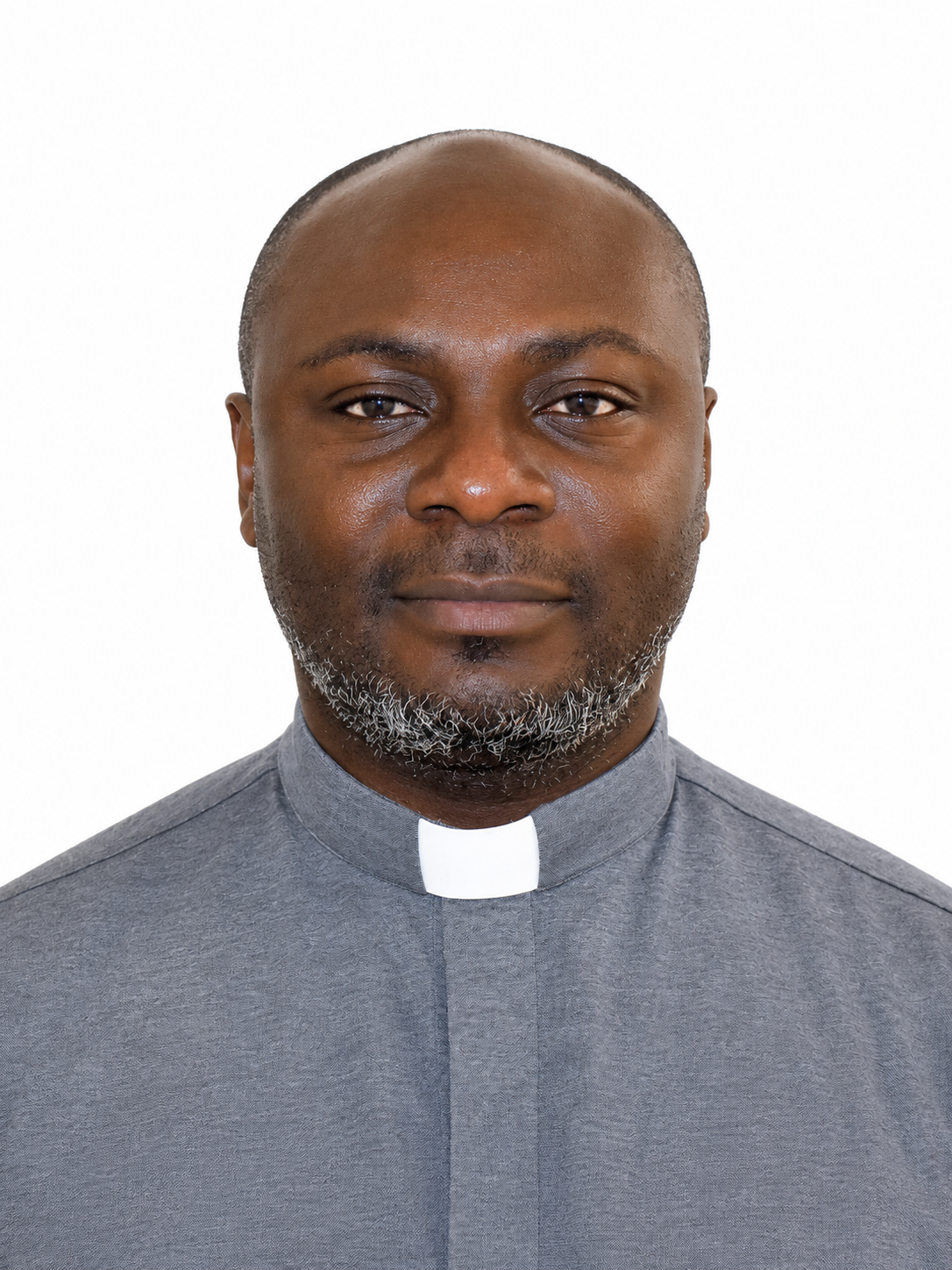
From the Ivorian border to Castelnaudary, the journey of an available priest, close to the people, and open to diversity
Looking back at your journey since your ordination in 2020, which missionary moments have most shaped your identity as an SMA priest?
Since my ordination in 2020, several missionary moments have profoundly marked my identity as an SMA priest. I would say that it is above all the encounters with people—particularly those living in situations of fragility—that have most transformed my understanding of the priesthood and the mission.
The first defining moment was the concrete discovery of mission in the field. I understood that mission is not only about proclaiming the Gospel through words, but also about being present, listening, accompanying, and sharing in the lives of people. These experiences taught me to be a priest close to the people, capable of reaching the concrete realities of those entrusted to me.
The second important moment was the encounter with young people. Their dynamism, their questions, but also their difficulties in facing the future, challenged me deeply. I discovered just how important it is for a priest to listen to young people, to encourage them, and to help them discern their vocation and their place in the Church and in society.
I was also marked by moments of difficulty and uncertainty in the mission. They taught me that the missionary cannot rely solely on his own strength. He must learn to trust in God, to persevere, and to accept working with others. These moments strengthened in me the spirit of availability, simplicity, and dependence on God.
Finally, what has most marked my identity as an SMA priest is the intercultural dimension of the mission. Being sent to people who sometimes have a culture, a history, or a way of life different from my own taught me to step out of my own habits. I understood that mission also begins with welcoming the other and with the capacity to let oneself be evangelized by the people one encounters.
After these years of ministry, I can say that my identity as an SMA priest has been gradually built around three attitudes: being available for the mission, being close to people, and keeping my heart open to the diversity of peoples and cultures. My journey since 2020 has especially taught me that the missionary is not the one who brings everything, but the one who lets himself be sent by God, who walks with others, and who seeks to bear witness to the Gospel through his entire life.
Your first mission in Grabo, in the diocese of San Pedro, immersed you in a rural and border context. What pastoral realities did you discover there, and how did they shape your way of serving?
My first mission in Grabo, in the diocese of San Pedro, was for me a true school of mission. The rural and border context allowed me to discover another pastoral reality.
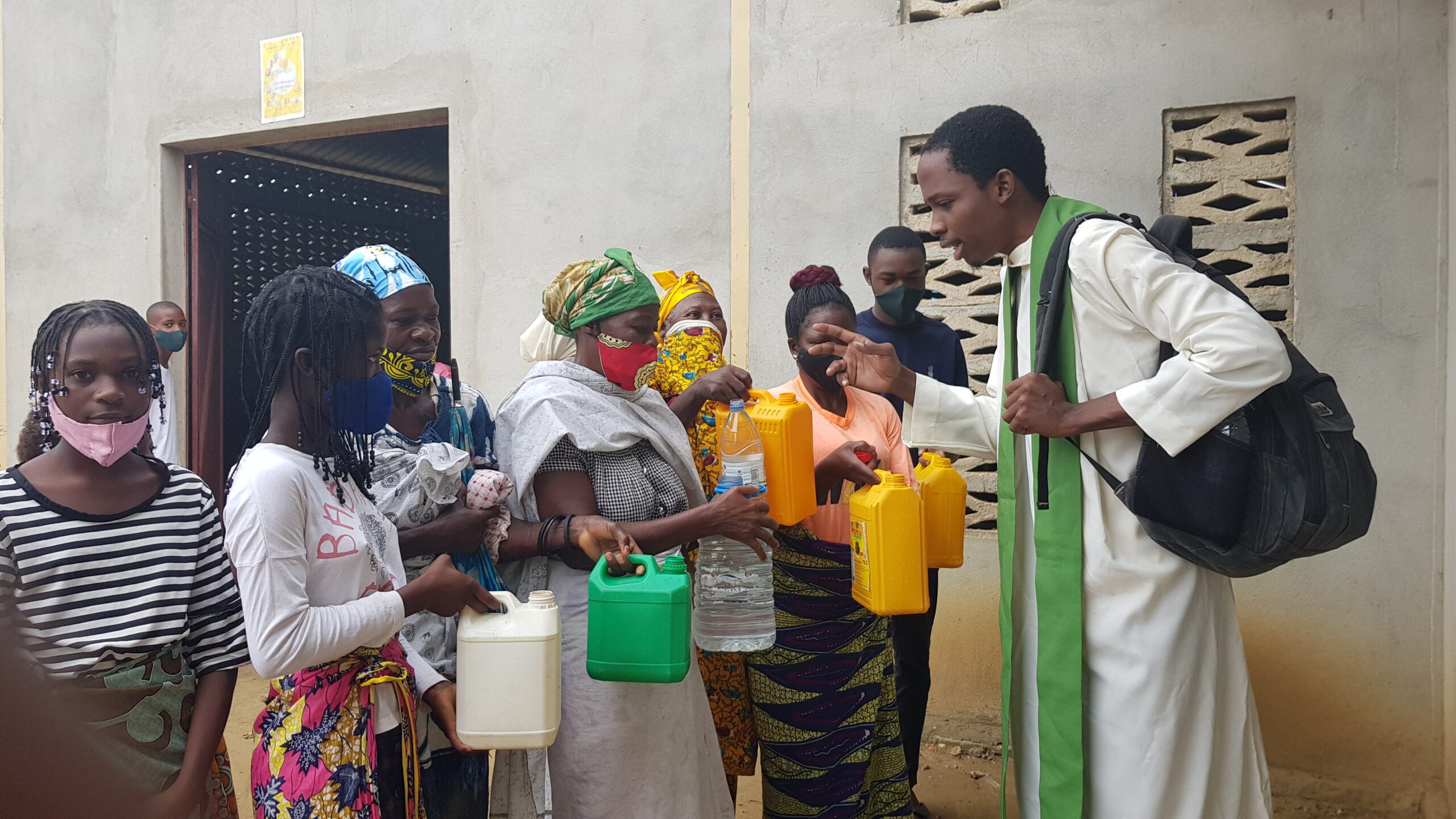
There I first discovered a population deeply attached to its faith, but confronted with numerous social and material difficulties. In some communities, the distances, limited means of transport, impassable roads, and living conditions sometimes made regular access to pastoral services difficult. This made me understand that the priest must know how to reach people where they live, and not just wait for them to come to him.
The border context also revealed to me a great human and cultural diversity. The movement of populations—especially Burkinabé and Liberians—the different communities, and the realities linked to the border taught me to welcome each person with respect, without confining the mission within categories or affiliations. I understood more deeply that the Gospel is destined for all and that the missionary is called to build bridges.
On the pastoral level, I also discovered the importance of basic Christian communities, catechists, and lay leaders. In a context where the priest cannot be present everywhere and all the time, the vitality of the Church depends greatly on the commitment of the laity. So I learned to trust them, to accompany them, and to give them greater responsibilities.
This mission especially taught me closeness and simplicity. Sometimes I had to accept taking time, walking, listening at length, sharing in the joys and difficulties of families. I understood that serving as a priest is not only about celebrating the sacraments or preaching, but also about knowing people, carrying their concerns in prayer, and walking alongside them.
Grabo thus shaped my way of serving by giving me a more listening, available, and close-to-the-people spirit. This first experience confirmed for me that the SMA mission requires stepping out of oneself, going toward the other, and allowing oneself to be transformed by the people and communities that God entrusts to us.
In Korhogo, you were both a parish priest and rector of the propaedeutic seminary of Kombolokoura. What challenges did you encounter in this dual responsibility, and how did you overcome them?
In Korhogo, I lived a particularly rich but also demanding experience, since I was called to exercise simultaneously the responsibility of parish priest and rector of the propaedeutic seminary of Kombolokoura. These two missions were different, but they complemented each other deeply.
The first challenge was that of availability. As parish priest, I had to be present with the Christian communities, accompany families, celebrate the sacraments, organize pastoral life, and respond to various requests. As rector, I had to simultaneously accompany the young propaedeutic students in their discernment, their human, spiritual, and intellectual formation. I had to learn to organize my time well and above all to set priorities.
The second challenge was personal accompaniment of the seminarians. Each young man arrived with his own story, his qualities, his fragilities, his expectations, and sometimes his questions about his vocation. I understood that one cannot accompany a vocation with a single method. One must listen a great deal, discern patiently, and know how to encourage while also setting the necessary requirements for authentic formation.
I also discovered the challenge of reconciling the demands of formation with fraternal closeness. The formator must be close to the young men, but he must also know how to set a framework. It is neither a matter of being simply a friend, nor of being only a person who imposes rules. One must help the young man to grow in responsibility and to gradually become an actor in his own vocation.
To overcome these challenges, I relied above all on prayer, organization, and teamwork. I learned not to want to do everything alone. Collaboration with fellow formators, pastoral leaders, and the laity was essential. I also learned a great deal from the young men themselves, because accompanying a vocation also means accepting to be challenged and transformed by those one accompanies.
This dual responsibility ultimately enriched me greatly. It taught me to be both a pastor and a formator, to listen more, to discern with patience, and to trust people. It especially reminded me that the mission is not only about making structures function, but about helping people and communities grow in faith.
This experience in Korhogo thus reinforced in me the conviction that the missionary priest is called not only to proclaim the Gospel, but also to raise up, accompany, and form new actors for the mission.
What pastoral or human joys have particularly nourished you during your years in Ivory Coast, both in parish life and in formation?
My years in Ivory Coast were for me a period of great joys, both on the pastoral and human levels. Beyond the responsibilities and difficulties encountered, I was above all deeply nourished by the people and the communities that welcomed me.
A first great joy was the closeness with Christian communities. I was touched by the simplicity with which people shared their faith, their joys, their difficulties, and their hopes. The celebrations, the meetings with families, the visits to the sick, and the various moments of parish life allowed me to discover a living Church, seeking to grow its faith at the heart of daily realities.
I also greatly appreciated the joy and spontaneity of young people. Their enthusiasm, their energy, and their many questions often stimulated me. In accompanying young people, especially at the propaedeutic seminary, I had the joy of seeing some make important steps in their discernment. When a young person becomes freer, more responsible, and more aware of God’s call in his life, it is a great satisfaction for a formator.
Another important joy was the richness of human relationships. Ivory Coast allowed me to meet people of diverse cultures and origins. I discovered a great capacity for welcome, a sense of fraternity, and a love of sharing. These relationships broadened my way of looking at others and taught me to consider diversity not as a difficulty, but as a richness.
I also hold a particular joy in the small things of daily life: a visit that gives courage to a person, a family that rediscovers hope, a young person who regains confidence, a community that mobilizes for a project, or simply a moment of fraternity around a meal. These are sometimes very simple things, but they give full meaning to the ministry.
Finally, these years nourished my own faith. I discovered that in the mission, one gives much, but one also receives much. The people we accompany often become, without knowing it, witnesses who evangelize us in turn.
Thus, my years in Ivory Coast will remain marked for me by the joy of serving, the beauty of encounters, the growth of communities, and the accompaniment of vocations. They have contributed to making me a priest closer to people, more attentive to their realities, and more aware that the mission is above all a human and spiritual adventure lived together.
You have accompanied young people in vocational discernment. What attitudes or values do you consider essential for forming future SMA missionaries?
To form future SMA missionaries, I think it is essential to develop in young people a profound faith, a spirit of prayer, availability, humility, and a sense of service. We must also help them become men capable of listening, living in community, adapting to different cultures, and going out to meet others without prejudice. Finally, vocational discernment must lead them to true inner freedom, so that they can respond to God’s call with generosity and responsibility.
Your journey has taken you to several countries (Togo, Ivory Coast, Benin, Nigeria). How have these intercultural experiences enriched your vision of the mission?
My journey through Togo, Ivory Coast, Benin, and Nigeria has greatly enriched me on the human and missionary levels. I discovered that, despite differences in language, culture, and social realities, peoples share the same fundamental aspirations: faith, fraternity, dignity, and hope. These experiences taught me to listen before acting, to respect local cultures, and to adapt to the realities of each people. They also allowed me to understand that mission is not a matter of borders, but an invitation to go out to meet the other, to build bridges, and to bear witness to the Gospel with humility. For me, being an SMA missionary means accepting to be enriched by others while bringing what one has received.
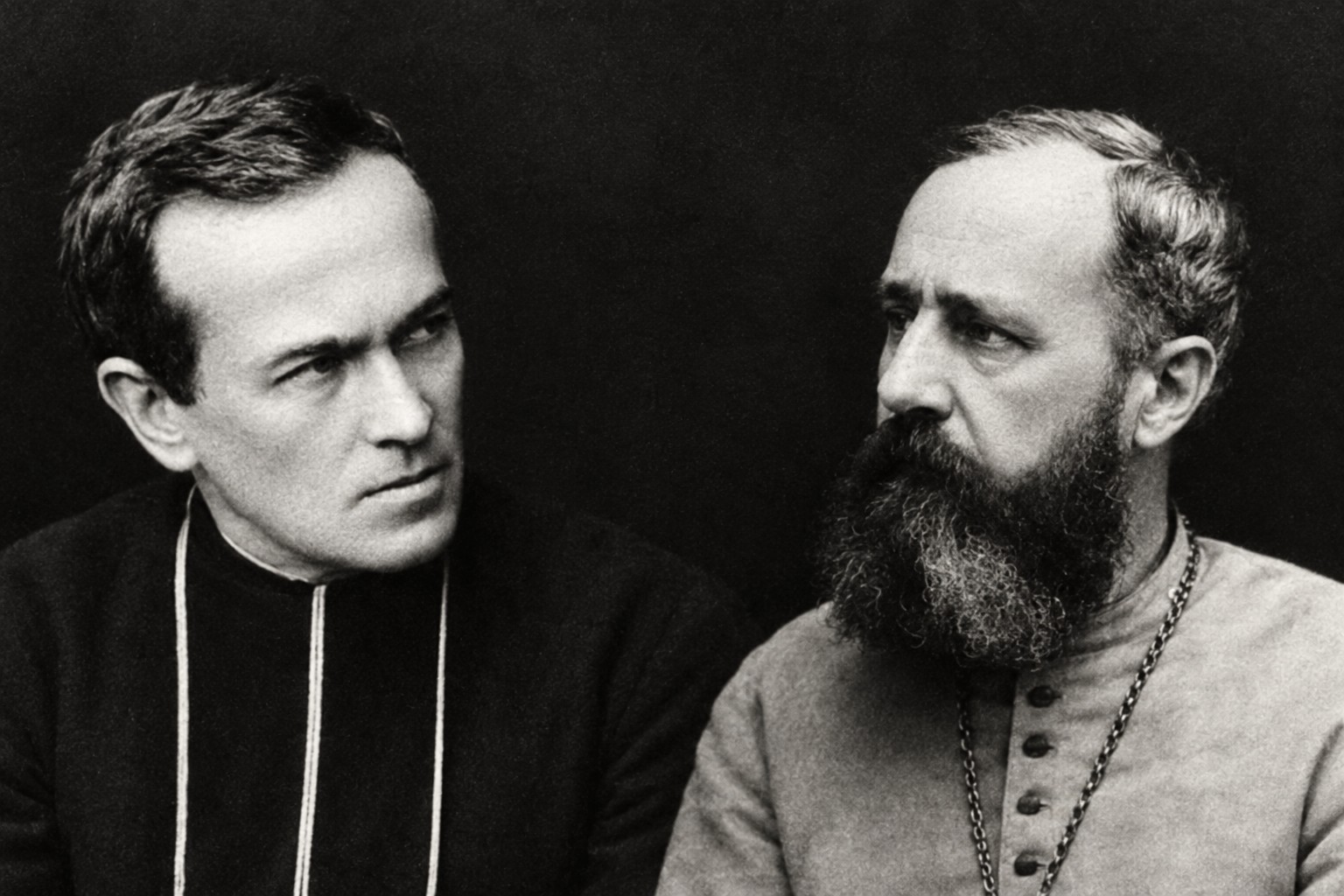
What aspects of SMA spirituality—inherited from Bishop de Marion Brésillac—have most guided you in your ministry thus far?
The aspects of SMA spirituality that have most guided me are above all missionary availability, the spirit of abandonment to God, simplicity, and attentiveness to peoples and cultures. The example of Bishop de Brésillac taught me to welcome the mission with confidence, even when it leads to new or demanding situations. I also try to live this spirit of fraternity with my confreres and to remain close to the people entrusted to me. For me, SMA spirituality can be summed up in an inner disposition: to let oneself be sent by God, to go out to meet the other, and to serve with humility and generosity.
As you leave Ivory Coast after six years of mission, what is your perspective on the evolution of the local Church and the place of missionaries today?
After six years in Ivory Coast, I have a very positive view of the evolution of the local Church. I discovered a Church that is increasingly vibrant, engaged, and capable of taking ownership of its own mission, with laypeople, young people, and local priests playing an important role. This shows that the presence of missionaries must evolve today: it is no longer just about coming to do things, but above all about accompanying, training, collaborating, and raising up new actors for the mission. The SMA missionary is thus called to be a brother who walks with the local Church, sharing his experience while allowing himself to be enriched by it in return.
You are about to join a team in Castelnaudary, the village of the SMA founder. What do you expect from this new mission, and how do you plan to put your African experience to use there?
I am joining Castelnaudary with great joy, but also with a spirit of listening and humility, aware of the particular dimension of this mission, in the birthplace of Bishop de Marion Brésillac. I would say that it is even a grace. I hope to discover more about his roots, to better understand his history and that of the SMA, while placing myself at the service of the local Church. My experience in Africa taught me closeness, listening, adaptation, and teamwork. I wish to put these assets at the service of the people I will meet, particularly by creating bonds, welcoming differences, and fostering fraternity. This new mission will be for me an opportunity to give what I received in Africa, but also to continue learning from the Church in France.
At this turning point in your missionary life, what personal vision do you carry for your future: what do you wish to deepen, transmit, or build in this new stage?
At this turning point in my missionary journey, I wish above all to deepen my relationship with God, my SMA vocation, and my capacity to be close to people. I would like to transmit what my years of mission in Africa taught me: the sense of fraternity, welcome, service, and the joy of the Gospel. In this new stage, I would especially like to build bridges between people and cultures, foster encounters, and contribute to a Church that is always more fraternal and missionary. I wish to move forward with humility, remaining available to what God will make of my life and my ministry.
Leave a Reply