
By Pierre-Paul Dossekpli
On 25 July 2026, the very day of his own birthday, Father Augustin Joseph Planque brought together, in his native village of Chemy, a missionary family gathered from every corner of the world. Two hundred years after his birth, this small village in northern France, part of the Sainte-Jeanne-Delanoue parish in the diocese of Lille, lived through a day its residents will not soon forget.
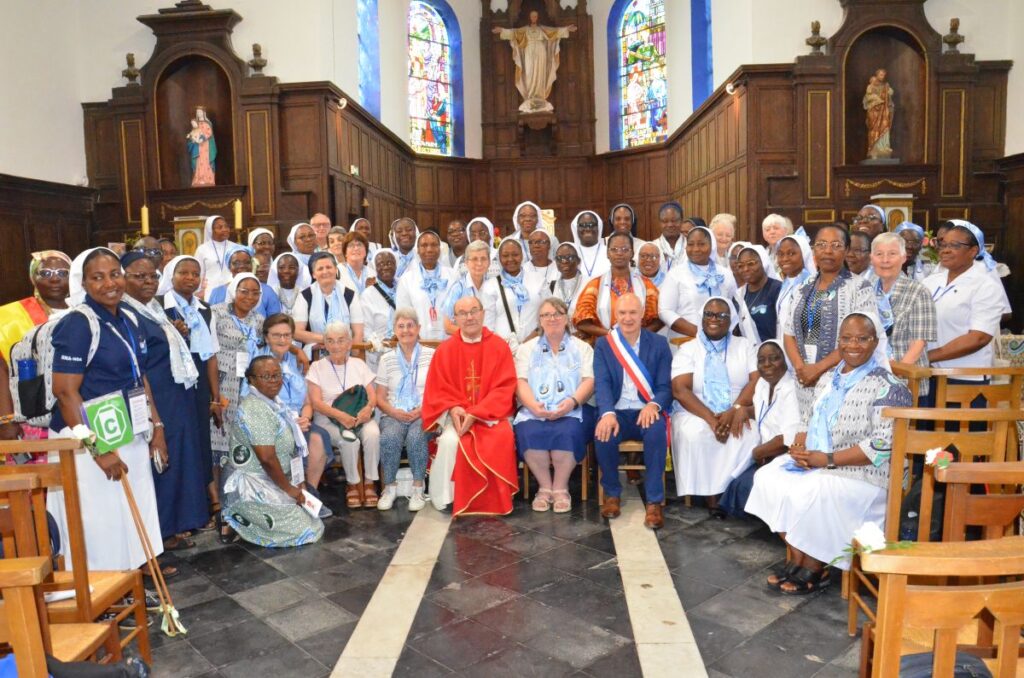
First Superior General of the Society of African Missions (SMA) and founder of the Our Lady of Apostles Sisters (OLA), Augustin Planque devoted his life to building a bridge between Europe and Africa. This Sunday, that bridge came alive again: pilgrims from Benin, Togo, Ghana, Côte d’Ivoire, Nigeria, Chad, Algeria, Ireland, England, Tanzania, Kenya, Burkina Faso, Lebanon, Egypt, the Central African Republic, Zambia and other countries walked the streets of his childhood to reflect on his story.
A Mass celebrated in the church of his baptism
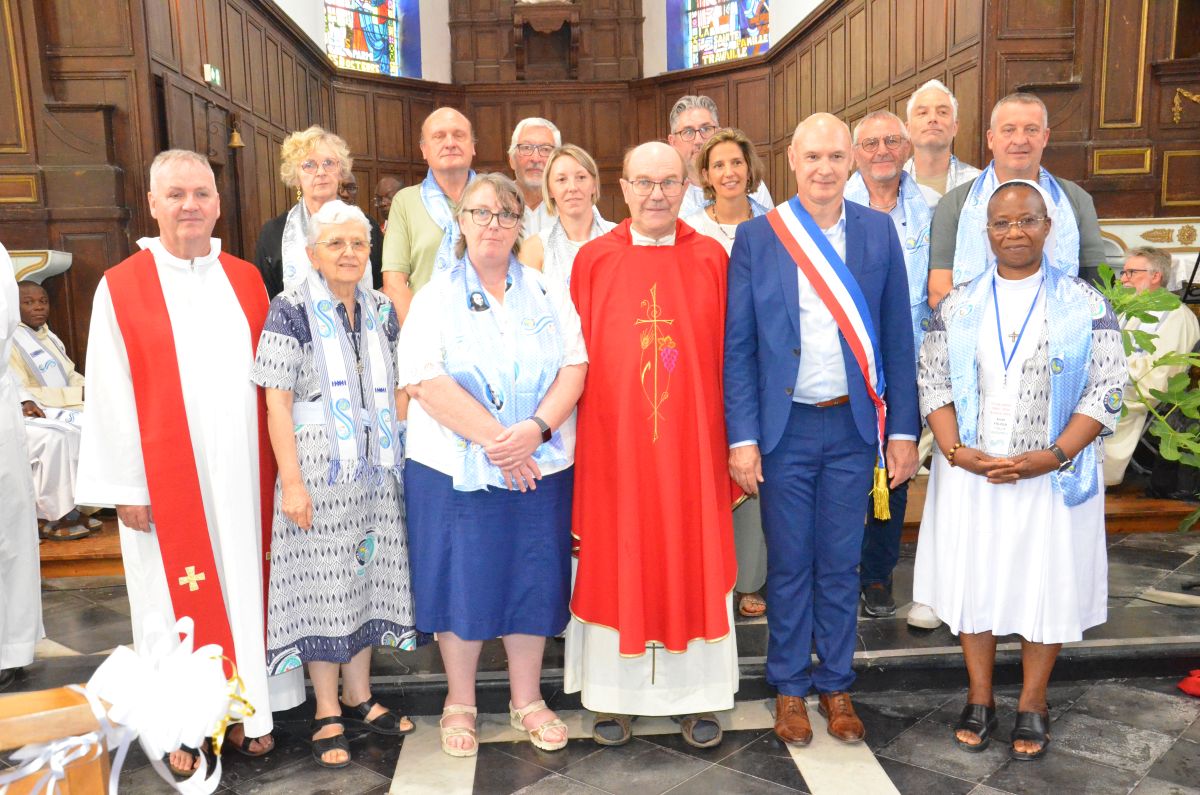
The Eucharistic celebration, presided over by Father François du Penhoat, Superior General of the SMA, was held at Saint-Martin church in Chemy, in the presence of Mayor David Duhayon and many local residents. Sister Mary T. Barron, leader of the OLA Sisters, offered a reflection inviting the assembly to reconnect with the past in order to better live the present.
In her reflection, delivered on the joint occasion of the Feast of Saint James and the bicentenary of Planque’s birth, the OLA Superior General meditated on the symbolic meaning of the name Augustin — received from his mother, Augustine — and of Joseph, present on both sides of his family: a missionary spirit joined to the heart of a faithful guardian.
She also recalled the decisive encounter with Melchior de Marion Brésillac, founder of the SMA, who once called on Planque to give himself “entirely to this work” — a call the young man answered simply with: “Present.” She noted that being the 14th Superior General of the OLA Sisters was no coincidence but a sign: just as the three sets of fourteen generations in Matthew’s genealogy each marked a turning point, this number would mark a threshold, the opening of a new chapter for the missionary family.
The emotion of Chemy’s residents
For Mayor David Duhayon, in office for only three months, the day will remain a landmark event of his term. “We’re a small village, so having a local figure celebrated by the whole world is quite something,” he said, praising a Mass filled “with great fervor, with so much singing.”
He saw in the presence of pilgrims from countries sometimes poorer than France a message sent back to the people of Chemy: the joy of living. A shared meal, not originally planned, came to seal the day. For Duhayon, the message carried by the SMA and the OLA Sisters is above all one of fraternity, a value which, in his view, makes all the others — liberty and equality included — possible.
Hervé Wartelle, a farmer born in Chemy, was equally moved to see “someone who lived here 200 years ago” draw so many people to his village, and looked forward to welcoming pilgrims back for a new celebration in ten or twenty years.
A pilgrimage with African resonance
For the religious sisters and faithful who came from Africa, the day held special meaning. Sister Pauline Bitanga, director of the Père Augustin Planque College in Togo — which will celebrate its 25th anniversary in September 2026 — said she came to “ask him to intercede” for her institution. Chantal Kaka, from Benin, whose children attended the Planque College in Cotonou, said she felt “at home” in Chemy, as though standing in for her children on this visit.
Sister Martha Davis, of the OLA congregation in Ghana, spoke of the emotion of discovering the founder’s birthplace, saying the visit brought Planque closer to the present generation. Finally, Ayao Akoété Koublenon, of the SMA Friends Association in Togo, praised a “truly momentous” day that finally allowed pilgrims to discover this village they had so often heard about, and one that, in his words, nourishes the shared spirituality of both congregations.
Two centuries after his birth, Augustin Planque continues to connect two worlds: the one of his childhood in northern France, and the one of Africa, which he loved so deeply — a bond that Chemy, on one July Sunday, made visible to all.
Leave a Reply