
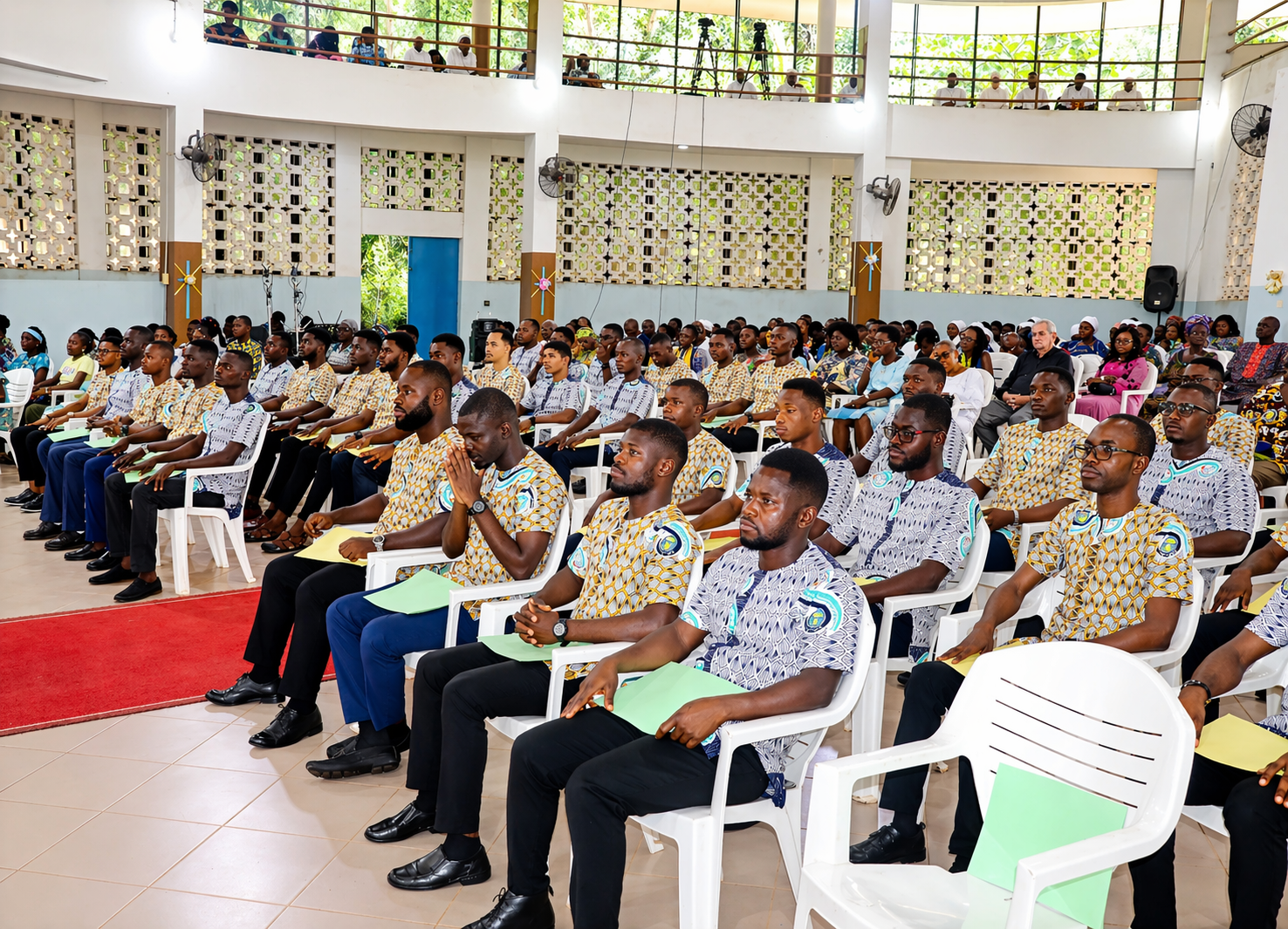
Abomey-Calavi is a commune located about 18 kilometers north of Cotonou, the economic capital of Benin. It is here that an international formation house shapes hundreds of future missionary priests through a unique balance of prayer, community life, manual work, and discernment.
Every morning at the International Spiritual Year House in Calavi, the day begins before sunrise. At 6:30 a.m., silence gives way to meditation. At 7:00 a.m., there is the Eucharist. Then come breakfast, formation sessions, manual work, sports, and evening prayer. This rhythm has formed and shaped hundreds of missionary priests of the Society of African Missions (SMA), coming from Africa, the Americas, Europe, and Asia.
For those who know the SMA, Calavi is a familiar name. Located in the heart of the Republic of Benin, this formation house is where seminarians are called to discern their vocation in the light of the SMA Charism. Here, the students receive a holistic formation – spiritual, human, intellectual, and moral – designed to prepare them for a life of missionary service.
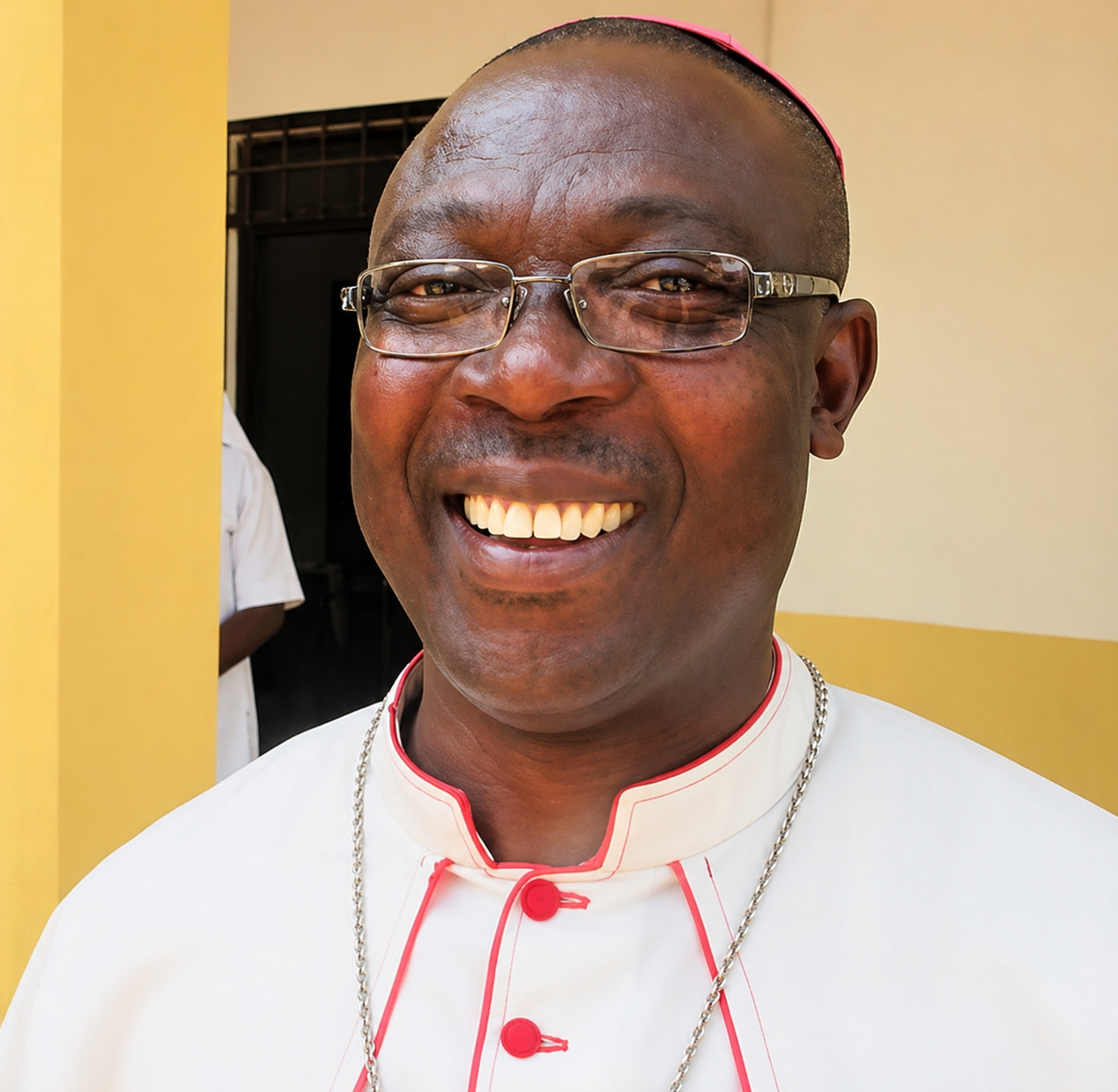
At the heart of this work is a small team of formators, men who have dedicated their lives to accompanying young people on their journey. One of them is Fr. Luc Kouakou Yao N’dah, an Ivorian priest who has spent most of his priestly life in formation work.
Let us clarify the framework: the International Spiritual Year begins each year on October 1st and ends on June 25th of the following year. This date is a feast day for the SMA because it marks the anniversary of the death of the founder, Bishop de Marion Brésillac, who died in Sierra Leone in 1859 on June 25th. It is also on this day that admitted students take their first oath/vows of commitment to the SMA for a period of one year. This year, the house welcomes 50 students (seminarians) and has five formators. Fr. Luc is the rector; he is assisted by Fr. Athanas Dotto (Tanzania), Fr. Andrzej Grych (Poland), Fr. Abel Attikassou (Republic of Benin), and finally Fr. Daniel Mellier (France), known by many of his former students as “Rigueur.”
A journey dedicated to formation
Ordained on July 14, 2007, Fr. Luc spent his first seven years as a missionary in northern Benin, in the parish of Péréré. But in 2015, after a year of studies on formation in Paris, he was called to join the Calavi team.
“I was here from 2015 to 2020,” he says. “Then I was sent to another formation house in Godeke, in Lomé, for four years. And to my great surprise, I was called back to join the Calavi team. I returned last September, in September 2024.”
What makes Calavi unique is not only its international character – the house currently hosts 50 seminarians – but also its deep conviction that spiritual formation cannot be separated from the rest of life. The daily schedule reflects this integrated vision: prayer frames the day, but the middle hours are devoted to classes, practical work, and community life.
The weight and joy of discernment
Ask Fr. Luc about the greatest challenges of his work as a formator, and he does not hesitate.
“The greatest challenge is the fear of making a mistake, of not being up to the responsibility when it comes to discernment,” he admits. “It is always a somewhat stressful, somewhat difficult moment to decide about the lives of the young men, since a decision inevitably directs their future.”
This weight – knowing that a formator’s judgment can shape a young man’s entire future – never completely goes away. Fr. Luc says he constantly prays for wisdom, not for himself alone but for the whole team.
“We ask greatly for God’s grace, so that not in my name but for the whole formation team, we may see rightly and above all help the young men in their journey.”
Yet the joys are equally profound. Seeing former students serving as ordained missionaries in the four corners of the world is, he says, “always a source of joy, satisfaction, and thanksgiving to the Lord as well.”
More than a seminary
Calavi is called a “spiritual year house,” but spirituality touches every aspect of existence there. The morning begins with house cleaning before breakfast. Sessions run from 9:30 a.m. to 12:00 p.m. After lunch and rest, the afternoon is devoted to practical activities: manual work, sports, or personal time.
On Saturday, singing class and house cleaning structure the morning. On Sunday, the surrounding faithful come for the 10 a.m. Mass, and the afternoon is free.
“This is a rhythm of life marked by prayer, meals, sessions, classes, and sports or manual work, which is also a time of rest,” explains Fr. Luc. “Two times of meditation during the day allow us to balance our days: starting from Christ, going out to activities in community, in fraternity, then returning in the evening.”
Self-sufficiency as a school of life
One of the most striking aspects of life at Calavi is its commitment to self-sufficiency. The house runs many livestock projects: broiler chickens, rabbits, ducks, guinea fowl, African “bicycle” chickens, pigs, sheep, and even five oxen. There is also a catfish (clarias) farm.
“We also have the garden, with vegetables that we consume as natural antibacterials, as food that restores our strength and gives us energy,” Fr. Luc details.
The goal is not only economic. “The concern, indeed, is to produce the maximum of things on site in order to have organic food, healthy food that allows us to maintain robust health.”
A new project aims to expand food crops – corn, cassava, yams – on the property, but a borehole is needed to irrigate the fields.
Living together beyond differences
With seminarians coming from several countries and continents, community life at Calavi is necessarily intercultural. For Fr. Luc, this is part of the gift.
“It is a time of conviviality, joy, openness, sharing, discovery of differences,” he says. “But it is also a time of listening and patience.”
Community life, he reflects, is where one learns mutual support, collaboration, and sharing a common ideal. “Being together, not being isolated alone, greatly nourishes spiritual life and relational life.”
He is equally affirmative about the support he receives from the other formators. “What I admire – and not only here, even when I was in a parish – is this priestly fraternity, this ability to be together, to support each other, not to be isolated.”
The struggle to open hearts
Asked about the recurring challenge he encounters among the students themselves, Fr. Luc does not point to material resources but to inner attitude.
“The best element that can facilitate formation is to see the young men truly open to receiving formation,” he says. “Seeing a young man who takes his own formation in hand, who is open, who is fulfilled – that pleases me. But when the opposite is true, it is a bit difficult.”
He carefully clarifies: “It is not we who form as such; it is the young men who open themselves to formation. A man is formed on the basis of what is proposed to him.”
Calavi, he notes, is a place where many arrive “with much apprehension, much fear.” The first weeks of each year are dedicated to dispelling that fear. “When we see that this fear is more or less dissipated and that openness to formation is achieved, it makes us happy.”
Supported by the whole SMA family
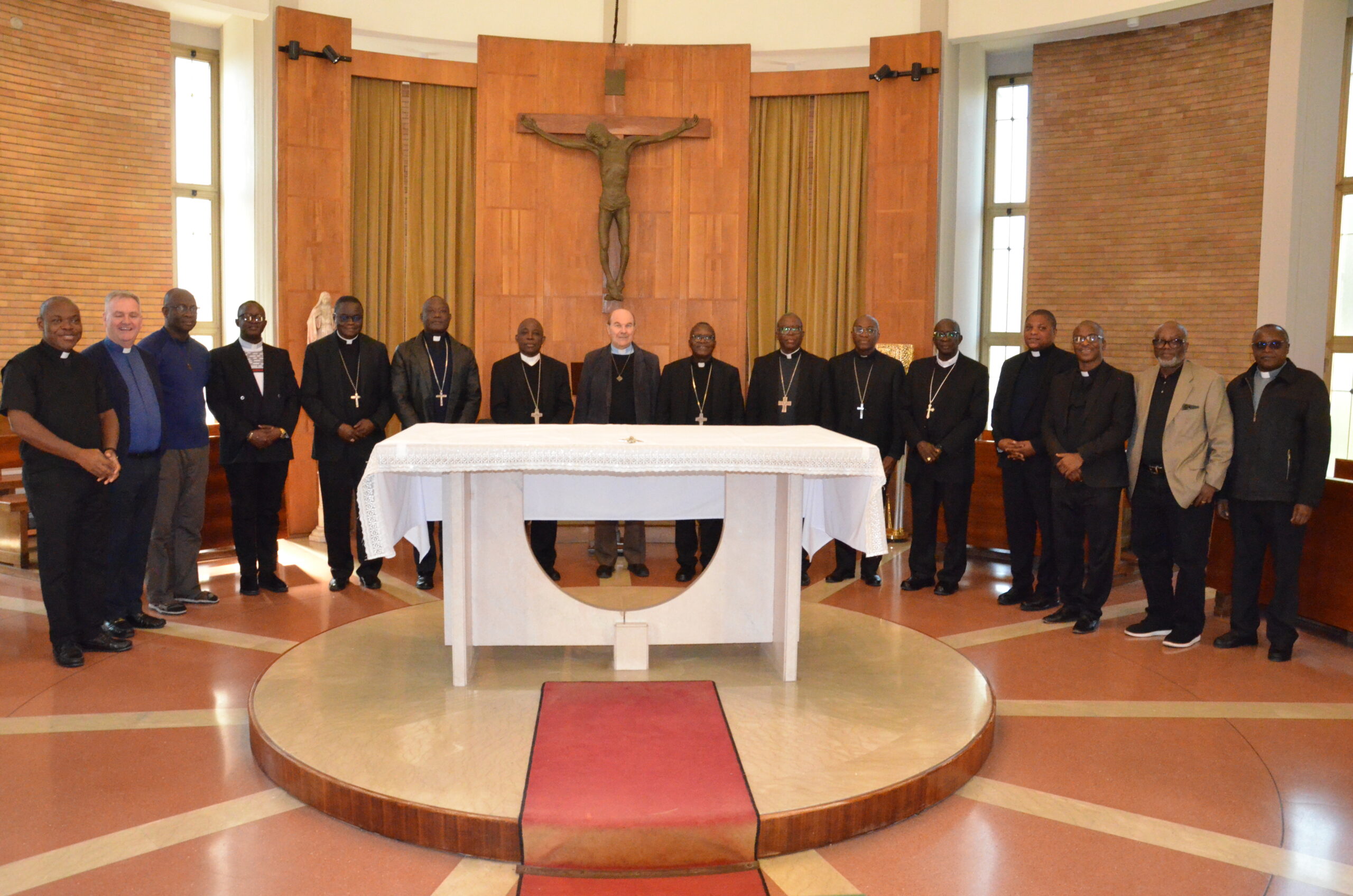
Fr. Luc insists: Calavi does not function in isolation. The SMA Generalate supports the house through budget and canonical visits. The home provinces regularly check in on their seminarians. Visiting confreres are always invited to meet and work with the students.
Throughout the year, SMA priests are invited for sessions on the Enneagram, Myers-Briggs, interculturality, sexuality, the Ignatian retreat, and pastoral internships. The Our Lady of Apostles Sisters (OLA) also contribute.
“All eyes are here, to be honest,” concludes Fr. Luc. “And it makes us happy to be at the heart of the whole Institute, of the whole Society of African Missions.”
Looking ahead
What keeps Fr. Luc going, after nearly ten years of formation work?
“My joy is to accompany the young men, to see them grow,” he says. “I gain from it in my own relationship, in my own spiritual life.”
The projects continue – food self-sufficiency remains the immediate goal – but the deep work remains the same: to create a place where young men can hear God’s voice clearly enough to respond to it.
As Fr. Luc says with evident satisfaction: “I would be ungrateful if I said that it has brought me nothing.”
Leave a Reply