

By Pierre-Paul Anani Dossekpli
In a world marked by fragility, violence, and uncertainty, consecrated life reminds us that mission begins with faithful presence. To be there, to remain, to share the lives of people: a discreet yet deeply evangelical way of proclaiming hope.
On the occasion of the World Day of Consecrated Life, the message of the Dicastery for Institutes of Consecrated Life invites us to reread mission from an essential perspective: that of presence. Not a presence that seeks visibility or efficiency, but one that is humble, faithful, and persevering, especially where human dignity is wounded and faith is tested.
In a world shaped by conflict, political instability, poverty, forced migration, and new forms of vulnerability, consecrated life can appear fragile. Yet it is precisely in these uncertain spaces that its strength is revealed. To remain becomes a missionary choice.
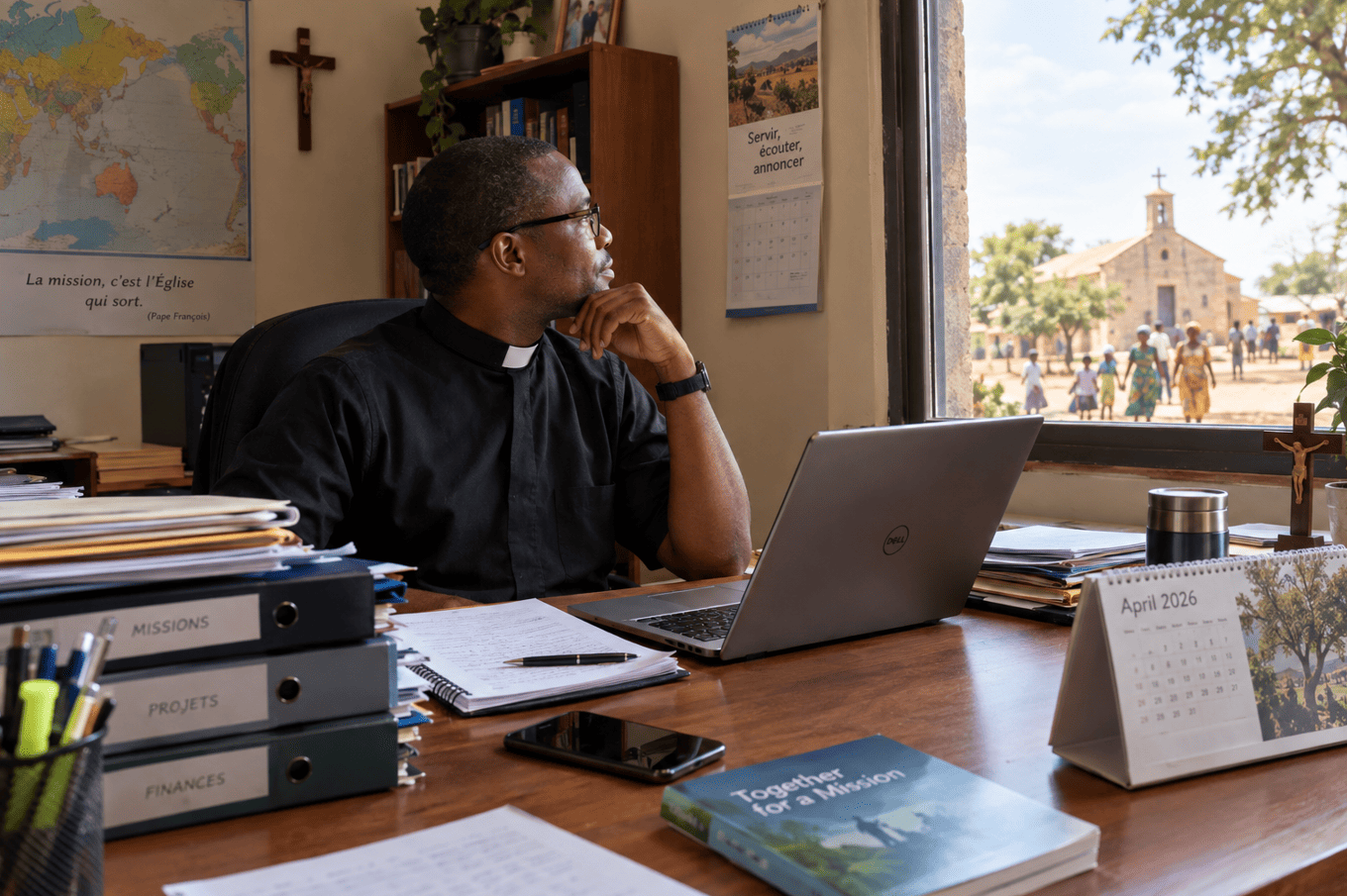
For the Society of African Missions (SMA), this understanding of mission is deeply familiar. Mission does not begin with action, but with proximity. Being present, staying, sharing daily life with people—often in complex situations and without any guarantee of visible results. Such presence is not an escape from difficulty, but a profoundly evangelical commitment.
In numerous parts of Africa and elsewhere, missionaries often reside within communities affected by violence, insecurity, or marginalization. Their presence silently signifies loyalty: loyalty to the Gospel, to the people, and to the ongoing process of human development. It demonstrates that God’s presence remains, even when institutions fail and hope appears delicate.
The Dicastery’s message highlights that this presence, though often discreet and unseen, carries a prophetic dimension. It is expressed through gestures of peace, words that disarm, and patient relationships that rebuild fraternity. In a world tempted by polarization and confrontation, such a way of being already speaks volumes.
For the SMA, missionary presence is also a school of peace. It calls for listening, dialogue, patience, and the rejection of all forms of domination. Peace is not born from opposition, but from encounter. It is built through daily proximity, often far from the spotlight. Consecrated life thus reminds us of a simple and demanding truth: mission is not first about what we do, but about how we inhabit the world. To remain with love, without abandoning, and to make one’s life a word of hope for our time and for our shared history.
Leave a Reply