

Every missionary knows that arriving in a new place is not simply a change of geography, but an entry into another way of thinking, believing, relating, and living. Cultural and pastoral orientation is therefore not optional; it is indispensable. It belongs to the very DNA of missionary life in the SMA and has long been a cornerstone of our missionary tradition, practiced in our various units. Yet today, this essential dimension is too often weakened, unevenly practiced, or become less systematic.
This weakening has real consequences. Confreres are sometimes sent into complex cultural and pastoral realities without sufficient preparation, and pastoral action risks becoming fragile, superficial, or disconnected from people’s lived experience. A fruitful mission cannot be improvised. It requires time, formation, and a deep understanding of the human, cultural, and ecclesial context in which it is exercised. Renewing and strengthening spaces of cultural and pastoral orientation is therefore not a secondary concern, but a pressing responsibility for our Society. To prepare missionaries to meet people with respect, sensitivity, and evangelical depth, the SMA must continue to invest in such spaces of orientation.
It is within this context and in response to this need that the experience of Les Cartières takes on its full significance.
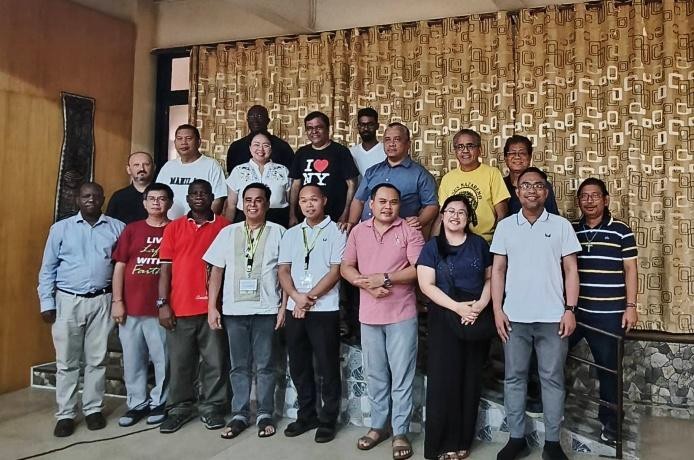
A session of welcome, orientation, and sharing, organized jointly by the SMA Provincial Council of Lyon, the Provincial Council of the Sisters of Our Lady of the Apostles, and the Fraternity of Lay Missionaries (FLM), was held at Les Cartières in France from February 1 to 5. The session brought together priests, religious sisters, and lay members from various countries and cultural backgrounds. This initiative was rooted in a strong conviction: a fruitful mission requires a deep understanding of the human, cultural, and ecclesial context in which it is carried out.
Designed as a genuine missionary formation experience, the session aimed to guide newcomers through a process of cultural and pastoral orientation. Its goal was to facilitate a harmonious and effective integration into their new mission environment. Beyond simply providing information, participants received tools to help them better understand the people they serve, their life paths, expectations, and ways of living the faith.
Discussions focused on discovering and appreciating local culture, understanding secularism, relationships between men and women, parent-child dynamics, and the concrete realities of daily life. These topics were approached not as mere sociological data, but as essential reference points for cultivating a pastoral approach that is incarnate, attentive, and responsive to people’s needs.
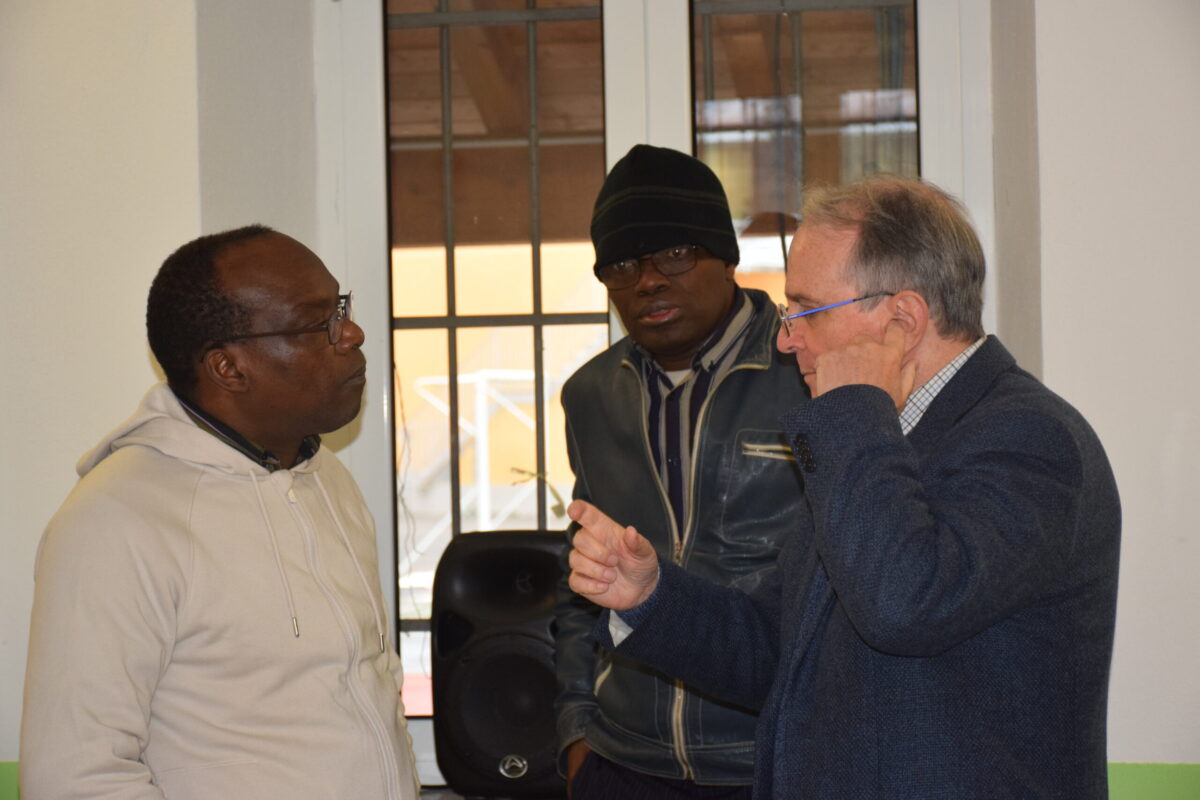
Beyond the teachings, the session provided a rich space for human encounters: a forum to dialogue, share experiences, be surprised, ask questions, and grow together. Participants were able to appreciate how an orientation, practiced with humility and openness, provides a solid foundation for a credible and fruitful pastoral presence, at the service of the proclamation of the Gospel in a world marked by diversity.
Its impact became especially evident through the reflections of the participants themselves. For many, it was a vivid demonstration of how indispensable cultural and pastoral orientation is for mission, a true eye-opener revealing both the challenges of entering a new context and the preparation required to serve effectively.
Fr. Simon Pierre Kakiau from the Democratic Republic of Congo stated: “We came first as missionaries, but missionaries within a very specific culture that requires us to understand it to carry out our mission well.”
Fr. Eric Yapi Yapi from Côte d’Ivoire emphasized the practical importance of this preparation: “In my country we say, ‘The foreigner has big eyes, but he does not see.’ It is good to help him see certain things, so that he does not make major mistakes and can enter society in a peaceful, calm… and smooth way.”
Pierre Ménard of the FLM highlighted the mutual benefit of these exchanges: “Each time, I discover new things about the Church in France, but also about what the participants bring with them, the richness of their experience.”
What was lived at Les Cartières confirms a simple truth: mission cannot fully bear fruit without cultural and pastoral orientation.
Les Cartières reminds us of a path already laid out, one that the SMA must continue to pursue, strengthen, and structure across all its units. While cultural and pastoral orientation remains present in many of our units, it needs to be approached with greater intentionality, consistency, and systematic care. Within the SMA, where mission ad gentes is a fundamental pillar of our identity, such sessions serve as a concrete example and a model to follow.
Following the example of Christ, who takes time to meet each person where they are, to listen, understand, and enter into relationship before calling them to conversion, we are invited to walk with people, learning from them and with them, so that the Good News takes flesh in concrete realities.
One certainty emerges from this experience: to orient is to choose a pastoral approach that is more humane, better adapted, and more hopeful.
As Saint Paul reminds us: “I have become all things to all, that by all means I might save at least some” (1 Corinthians 9:22).
Brice Ulrich AFFERI



Leave a Reply