

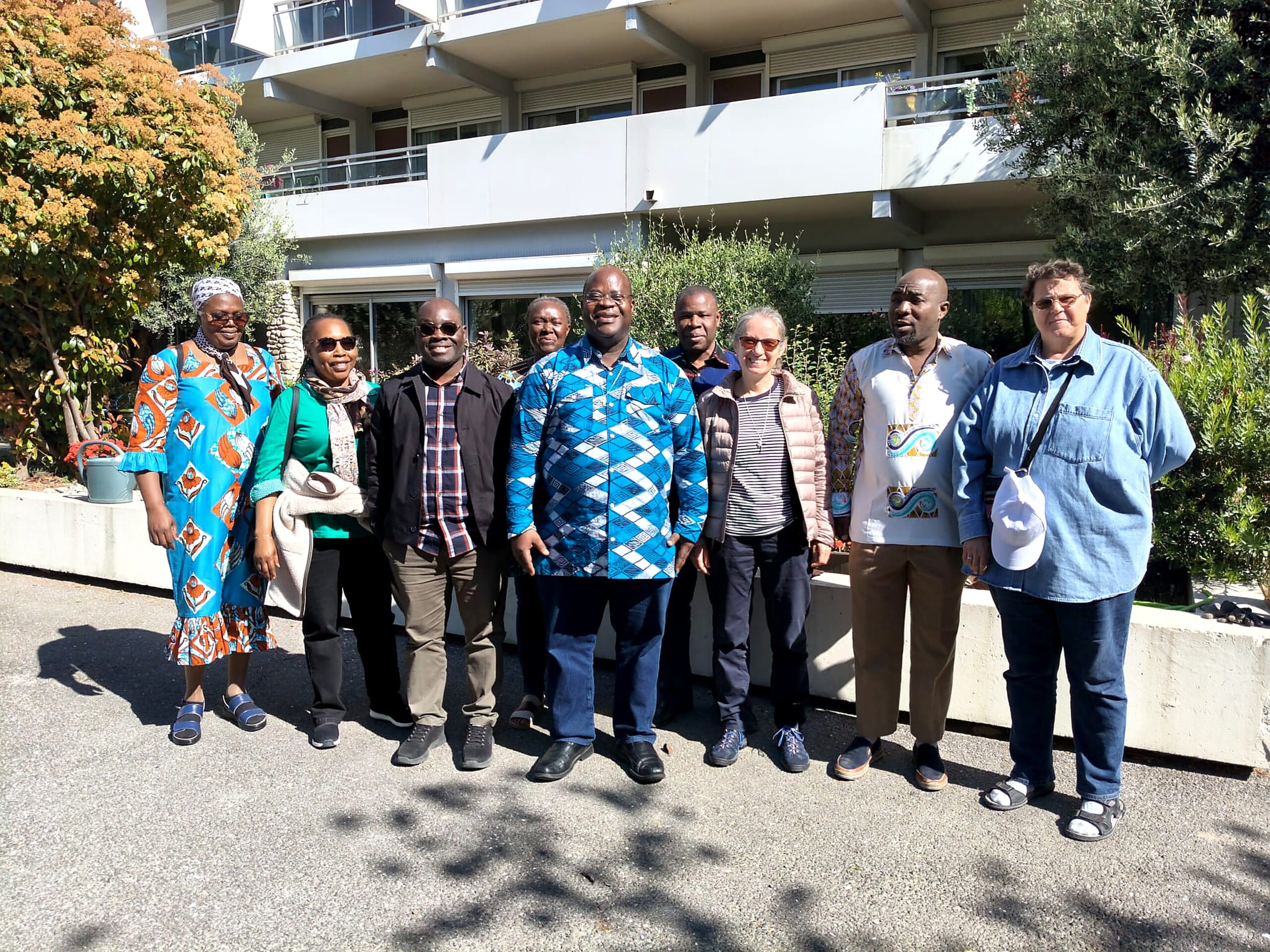
Lyon, July 3, 2024 – After five years of in-depth research, Charles Crispin Tshingani Mvunzi, a priest of the Society of African Missions, successfully defended his canonical doctorate in philosophy at the Catholic University of Lyon. His thesis, titled “From Legal Human Rights to Political Human Rights in Claude Lefort: The Universality of Human Rights Amid Contemporary Crises,” spans 521 pages and was highly praised by the jury.
The jury, composed of four esteemed professors, awarded Charles Tshingani the highest honors, conferring upon him the title of Doctor of Philosophy from the Catholic University of Lyon.
Thesis Summary
“Human rights are indeed unfortunate,” as Luc Ferry puts it in his book “Political Philosophy.” This statement is not an ironic mockery of human rights nor an embellishment of anti-human rights rhetoric. Instead, it reflects the continuous challenges and criticisms human rights have faced since their proclamations in the 17th century in England and the United States, in the 18th century with the 1789 Declaration of the Rights of Man and of the Citizen in France, and in the 20th century with the 1948 Universal Declaration of Human Rights in Paris.
Critics argue that human rights, particularly the Universal Declaration, are a Western political tool serving economic interests abroad and benefiting multinational corporations. They call for reform or even rewriting of the Declaration to reflect cultural diversities. Despite these criticisms, human rights have significantly benefited humanity, safeguarding individual fundamental freedoms and responding to atrocities such as world wars, genocides, crimes against humanity, and dictatorships.
The Universal Declaration was internationalized legally to serve as a universal law guiding nations and states. Unfortunately, the legal approach has not succeeded in ensuring the universality of human rights. Persistent violations and the decline in the practice of these rights have weakened their effectiveness. The French philosopher Claude Lefort, who linked human rights with democracy, viewed them as the “generative principles of democracy” and essential to a good democratic regime. However, his perspective has not eliminated the obstacles to the universality of human rights.
Today, the universality of human rights faces contemporary crises, including racism, anti-Semitism, anti-Zionism, populism, the politicization of immigration, individualism, and other forms of discrimination. Rather than remaining passive, we must actively work to resolve these major contemporary crises that pose permanent threats to human rights, democracy, the rule of law, and good governance. This is the goal pursued throughout this modest investigation.
In celebrating this academic achievement, we acknowledge the importance of this research in illuminating contemporary debates on human rights and their crucial role in modern societies. Congratulations to Dr. Charles Crispin Tshingani Mvunzi for his exceptional work and significant contribution to philosophy and human rights.


Leave a Reply